From Asnières to Texas: A Guide to Louis Vuitton Production and Craftsmanship
Louis Vuitton is associated with French luxury and iconic design.
Today, Louis Vuitton is a global manufacturer of leather goods — no longer just from France.
The brand operates its own workshops in several countries, and markings such as “Made in France”, “Made in Spain”, “Made in Italy” and “Made in USA” appear on original Louis Vuitton products.
These markings reflect not only the origin, but also Louis Vuitton’s development as a global artisan brand.
In this guide, we take a closer look at how production is organized – and show specific examples of what the different markings look like in practice.
This guide is for informational purposes only and is based on publicly available information, industry sources, collector archives, authentication databases, applicable Industry Authentication Standards and many years of experience with authentic Louis Vuitton bags.
In this guide we will cover:
-
Where are Louis Vuitton bags made today?
-
Louis Vuitton authentication – genuine heat stamps with and without “made in”
-
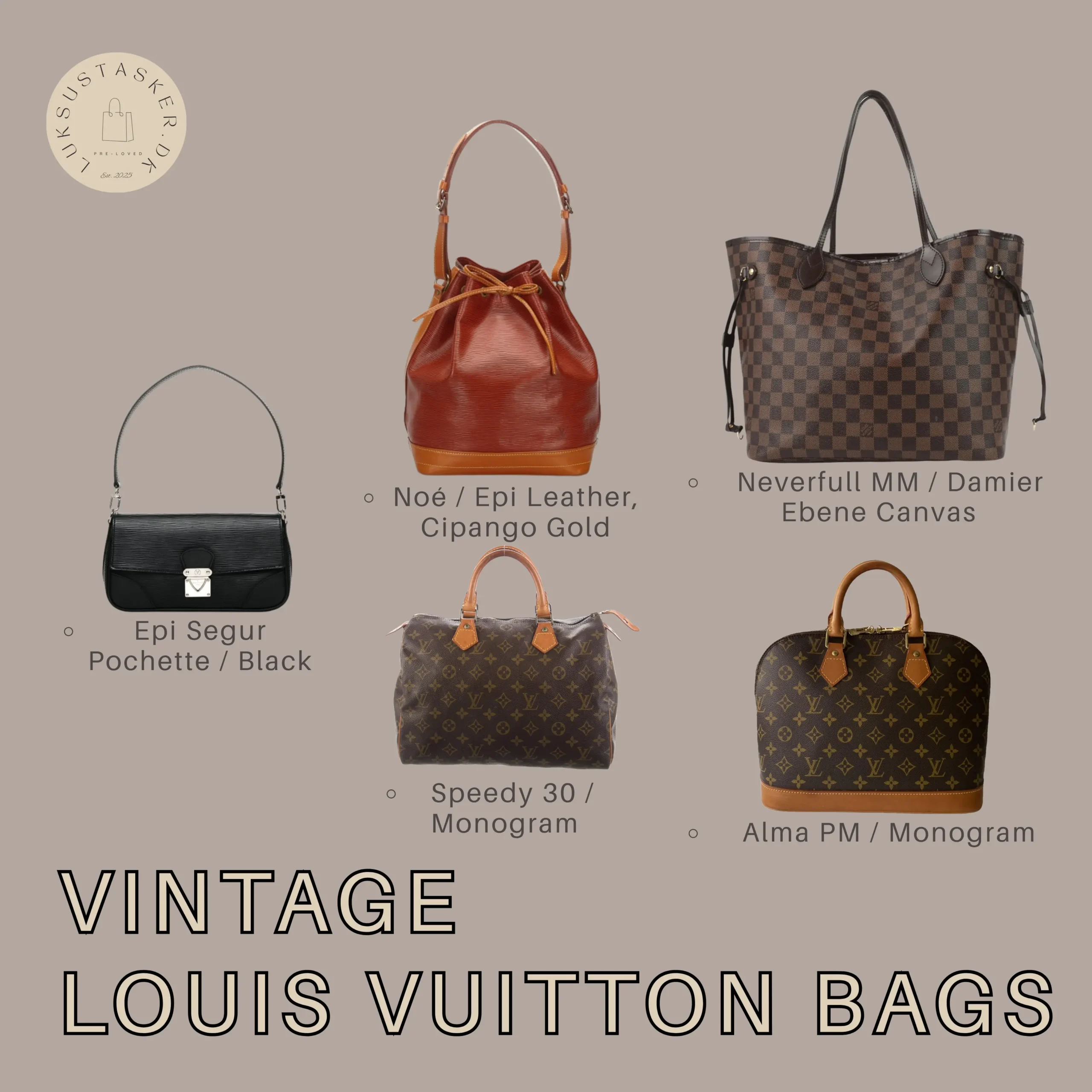
Vintage Louis Vuitton (before 1990)
-
The French Luggage Company (USA, ca. 1976–1991)
-
Date codes and microchips
-
Date codes and microchips
-
Sustainability and craftsmanship
-
Quality and authentication of pre-loved models
-
Conclusion – What does “Made in” mean today?
1. Where are Louis Vuitton bags produced today?
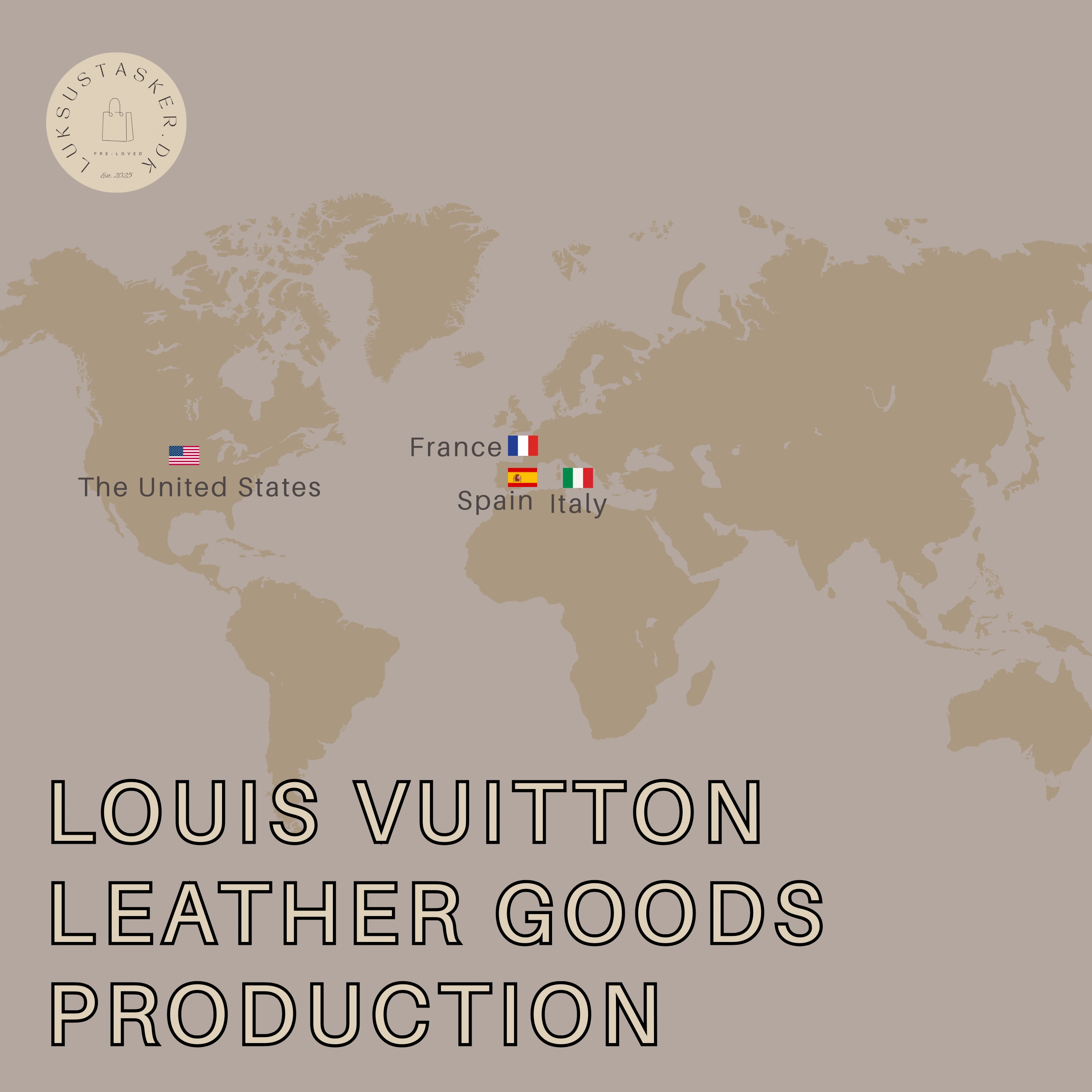
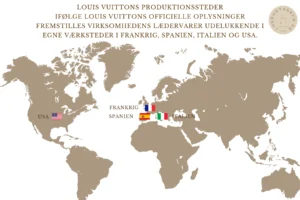
According to Louis Vuitton’s official information, the company’s leather goods are manufactured in its own workshops in France, Spain, Italy and the USA.
France
Production includes, among others: the historic atelier in Asnières-sur-Seine (established 1859) and workshops in Vendôme (Abbaye & Oratoire), Beaulieu-sur-Layon, Saint-Pourçain-sur-Sioule, Juilley / Ducey-les-Chéris, Sainte-Florence / Essarts-en-Bocage and La Merlatière.
Spain
In Catalonia, there are several production units — three in Barberà del Vallès and workshops in Girona and Santa Perpètua de Mogoda.
Italy
In Tuscany, Louis Vuitton operates workshops in Pontassieve (Le Sieci) and Rignano sull’Arno.
USA
In 2019, Louis Vuitton opened the Rochambeau Ranch facility in Texas (Keene / Alvarado).
Previously, the brand had production in San Dimas and Irwindale, California; the current status of these workshops has not been publicly confirmed.
Why production in several countries?
Louis Vuitton is gradually expanding its production capacity to preserve the tradition of craftsmanship and meet growing demand.
All workshops work to the same standards of quality and training, and craftsmen are trained through Écoles Louis Vuitton – the brand’s own training centers.
A bag made in Spain or the USA therefore has the same precision and quality as a “Made in France” model.
2. Louis Vuitton authentication – genuine heat stamps with and without “made in”
Louis Vuitton uses several types of official heat stamps depending on the year of production and workshop.
The classic heat stamps show the text “made in” followed by the country of production, while newer models may instead have an embedded microchip without visible “made in” text.
Below are documented examples of genuine Louis Vuitton heat stamps – both classic and modern versions.
All examples follow Louis Vuitton’s official production standards and are used exclusively on authentic bags.
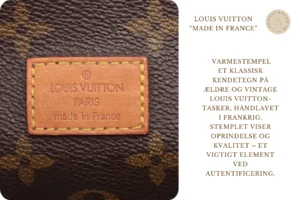
Genuine example of heat stamp “Louis Vuitton Paris – made in France”
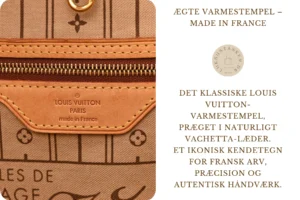
This is the most iconic and historic embossing used on bags produced in Louis Vuitton’s French workshops.
France is the brand’s original homeland, where production began in Asnières in 1854 – and many of its most famous models, such as the Speedy, Alma and Neverfull, are still made here.
The heat stamp is embossed into natural vachetta leather with precise typography and even embossing – a hallmark of authentic Louis Vuitton craftsmanship.
The “Made in France” stamp has been used since the 1980s and is still found on both classic and newer models, even after the introduction of microchips in 2021.
This embossing is a sure sign of genuine origin and Louis Vuitton’s historic quality.
💡Expert tip: On genuine French heat stamps, the embossing is always centered, the letters are evenly spaced, and the “O” in LOUIS is almost perfectly round – even small deviations here are often signs of copies.
Authentic example of a “Louis Vuitton Paris – made in Spain” heat stamp
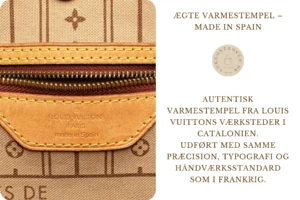
Louis Vuitton has had official workshops in Spain since the 1990s, primarily for the production of small leather goods and bags in the Monogram and Damier series.
Production takes place under the same control and quality standards as in France, and the “Made in Spain” heat stamp is therefore fully authentic.
The embossing is typically slightly deeper in the leather, but done with the same typography and accuracy as in the other LV workshops.
Spain today plays a central role in Louis Vuitton’s European production and represents modern, high-quality craftsmanship.
💡Expert tip: Genuine Spanish heat stamps may vary slightly in the color tone of the leather, but the lines remain sharp.
If the letters appear “smeared” or irregular, it is a warning sign.
Genuine example of a heat stamp “Louis Vuitton Paris – made in Italy”
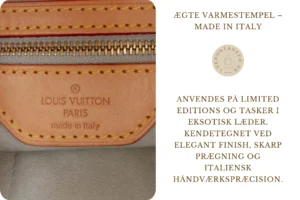
Italian workshops are used especially for limited editions, runway collections and models in exotic leather.
“Made in Italy” acts as a seal of quality, associated with precision, luxury and craftsmanship.
The workshops are located in northern Italy and work closely with Louis Vuitton’s design teams in France to ensure identical quality and finish.
This embossing is hot-stamped on high-quality leather with sharp letters and even spacing – details that are often missing from counterfeit products.
Authentic Italian LV bags are considered among the most refined in the brand’s current collections.
💡Expert tip: On authentic Italian heat-stamps, the letters are very precisely embossed with a slight sheen.
Replicas often show uneven embossing or dull color that fades quickly.
A real example of a heat stamp “Louis Vuitton Paris – made in U.S.A.”
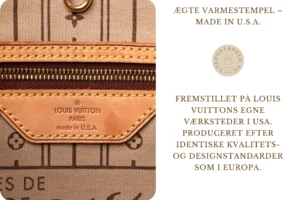
Since the 2010s, Louis Vuitton has had its own workshops in the United States to manufacture bags and accessories for the North American market.
Production takes place under the same global standards as in the European workshops, and the “Made in U.S.A.” heat stamp is therefore an official and authentic LV mark.
Bags with this embossing have the same typography, embossing and quality as models produced in France.
Louis Vuitton confirms that all workshops – regardless of country – work according to identical Industry Authentication Standards, so the quality is always the same.
💡Expert tip: Genuine American heat stamps may be slightly deeper embossed into the leather than European ones,
but the letter spacing and typography remain consistent.
Genuine example of a “Louis Vuitton Paris” heat stamp (without “made in”)
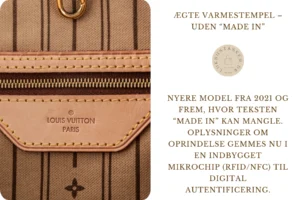
This heat stamp is found on certain newer models, produced from 2021 onwards, when Louis Vuitton began introducing microchips (RFID/NFC) as a replacement for date codes.
Some bags lack the “made in” text because information about the country of manufacture and serial number is now recorded in the chip, which can only be read by Louis Vuitton itself.
However, according to experts and sources such as Rebag, Bagaholic and Couture USA, many newer bags still have the traditional “made in” embossing – especially classic models such as Speedy, Neverfull and Alma.
During the transition period, models are therefore available both with and without “made in”, depending on the year, model and workshop – both types are fully authentic.
The location of the “Louis Vuitton Paris” logo may vary slightly between models, but the typography and embossing remain identical.
The absence of “made in” is therefore not a sign that the bag is fake, but part of Louis Vuitton’s transition to digital authentication.
💡Expert tip: On newer heat stamps without “made in”, the correct typography is crucial – the letters should be evenly placed, precisely embossed and without excess pressure.
Notes on Heat Stamps – The Expert’s Checklist
For an accurate assessment of Louis Vuitton heat stamps, the following points can help you understand the variations and typical characteristics:
- Typography and capitalization:
LOUIS VUITTON PARIS is always embossed in capital letters, while the made in line is in lowercase.
The country is written with a capital letter (e.g. made in France / made in Spain / made in Italy), and the U.S.A. is indicated with periods.
- Registration symbol (®):
® may appear above LOUIS on some models and be absent on others.
This depends on the vintage and product series and is not in itself a sign of authenticity or a copy.
- Blind vs. foil embossing:
On classic vachetta leather models, blind embossing (without color) is typically used.
On some materials such as Vernis and Empreinte, the embossing can be done with gold or silver foil – both types are officially used by Louis Vuitton.
- Placement of the heat stamp:
The location may vary depending on the model and year – for example in an inside pocket, on a leather patch or in the lining.
The absence of the embossing in an expected place is not automatically a sign of a copy – always assess the whole.
- Date code or microchip:
Bags produced between 1982 and March 2021 have a date code that must match the country on the heat stamp.
From 2021 onwards, Louis Vuitton is gradually using microchips (RFID/NFC), and some models therefore lack the visible “made in” text.
- Specifically for USA production:
Certain American models, especially after 2012, may have a separate label with the text
“Made in U.S.A. of imported materials”.
This label is used officially and does not replace the heat stamp, but complements it.
3. Vintage Louis Vuitton (before 1990)
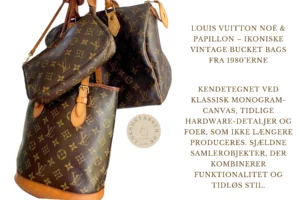
Before 1990, the majority of Louis Vuitton bags and accessories were created in France – specifically in the historic atelier in Asnières, where the brand’s heritage and craftsmanship took shape.
Here, the story began with suitcases and travel bags, designed for the elegant travel culture of the time.
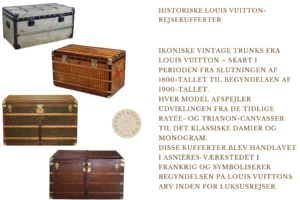
The iconic Monogram and Damier canvases laid the foundation for the handbags that would later define Louis Vuitton’s timeless style.
Vintage models from this period still carry the legacy of the early collections:
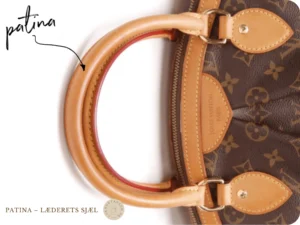
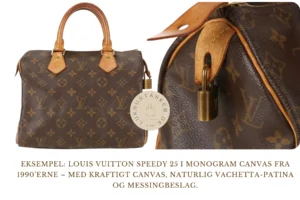
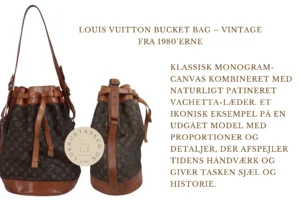
brass hardware, natural vachetta leather and the beautiful patina that develops over the years.
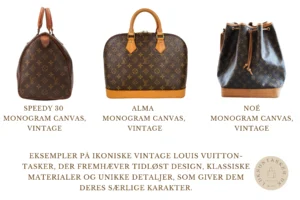
These details tell the story of Louis Vuitton’s evolution – from classic travel suitcases to iconic bags that continue to symbolize craftsmanship, quality and French elegance.
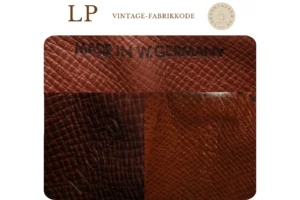
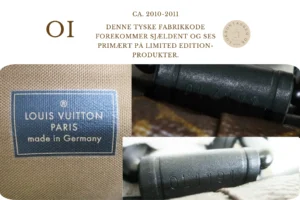
Although the main production remained in France, some products were made for special export markets – including rare examples marked “Made in Germany”, primarily small accessories.
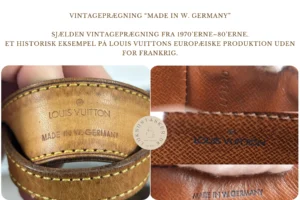
These are considered rare collector’s items and were not part of Louis Vuitton’s serial production.
Vintage Features
- Natural vachetta leather with darker patina
- Hand-stitched details with waxed thread
- Heavy brass hardware
- Older logo embossing with thinner font
These features help identify the model, age, and origin.
4. The French Luggage Company (USA, c. 1976–1991)
During this period, Louis Vuitton entered into a licensing agreement with the American manufacturer The French Luggage Company, which manufactured bags for the American market under official authorization.
The agreement was established to meet customs regulations and ensure faster distribution in the United States.
The bags were sold through luxury stores such as Saks Fifth Avenue, Neiman Marcus, and Myers.
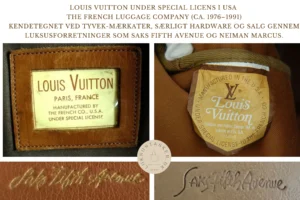
Characteristic features of these models:
- Tyvek labels instead of leather labels
- Absence of date codes
- Special hardware and zippers
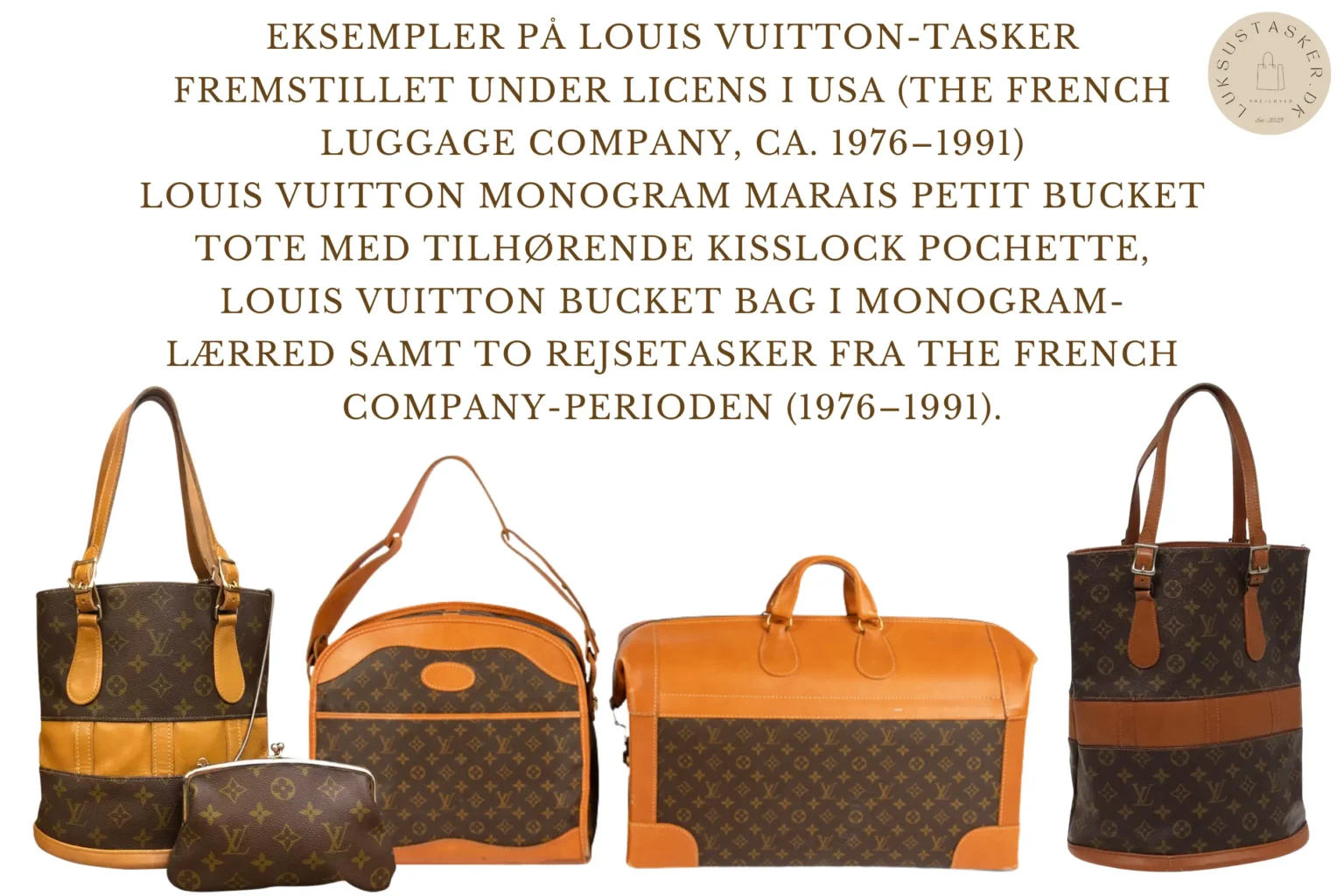
These models differ in construction, but are considered authentic licensed editions of the period by collectors.
5. Date codes and microchips
Authentic Louis Vuitton bags have an internal stamp indicating the country of origin — “Made in France”, “Made in Spain”, “Made in Italy”, “Made in USA” or more recent heat stamp — without “Made in” (Louis Vuitton Paris)
Since 1982, Louis Vuitton has used date codes, which combine letters and numbers to indicate the place and period of production.
The format of these codes has changed several times over the years, but has always served as an internal reference point for production.
Starting March 1, 2021, Louis Vuitton began gradually introducing microchips (NFC/RFID) instead of the traditional date codes.
This technology is used in newer models and allows internal tracking and authenticity checks through Louis Vuitton’s own systems.
According to industry sources, the chip stores information about the production, but this data is not publicly available to the consumer.
You can read more about the evolution of date codes from 1982 to the transition to microchips (NFC/RFID) in this article.
What you should know?
• The embossing (“Made in …”) must be clear, precise and correctly placed.
• The date code must match both the country and the period.
(Check: Compare the date code with the “Made in …” stamp and other signs of authenticity such as materials, stitching and hardware.)
• The absence of a date code does not necessarily mean that the bag is fake — newer models may be equipped with a chip instead.
• Always evaluate the bag as a whole — logo, hardware, materials (canvas, leather), stitching, inner lining, transitions and even the scent.
💡Expert tip: The introduction of microchips in Louis Vuitton products is part of LVMH’s digital initiative for authenticity and traceability.
Since 2021, Louis Vuitton has been part of the Aura Blockchain Consortium – a collaboration between LVMH, Prada and Cartier – which aims to create secure, digital passports for luxury products using blockchain and NFC technology.
6. Sustainability and the future of craftsmanship
Louis Vuitton is committed to sustainability and the training of artisans.
In France, Italy and Spain, the brand has established Écoles Louis Vuitton – training centers where new generations are trained in traditional leather techniques combined with modern production.
The brand participates in the LVMH group’s LIFE 360 initiative, which focuses on material recycling, energy-efficient workshops and CO₂ reduction.
The company also supports projects such as Artisans for the Future and Circular Creativity, which promote responsible luxury production.
The goal is to combine classic craftsmanship with modern sustainability – and ensure that future production preserves Louis Vuitton’s heritage and quality.
7. Quality and authentication of pre-loved models
When you buy a pre-loved Louis Vuitton, it’s not just about authenticity – it’s also about understanding the craftsmanship behind it.
It’s the quality of the details that often reveal how well the bag has retained its shape and beauty over the years.
Louis Vuitton was created as a symbol of durability. The brand’s bags don’t just have to look flawless – they have to maintain their elegance and structure for decades.
That’s why each model undergoes a thorough quality control before it leaves the workshop. Even the smallest details are checked manually: stitching, zippers, edges and hardware.
These standards apply to all Louis Vuitton workshops worldwide and are at the very core of the brand’s DNA – precision, aesthetics and attention to every detail.
What to look for
When evaluating a used Louis Vuitton model, you should especially look for:
• Materials – coated canvas and natural vachetta leather, which over time acquire a beautiful patina.
• Symmetry – the monogram should be centered and the pattern aligned along the seams.
• Stitching – even, tight and without loose threads.
• Hardware and logo – sharp engravings and precise placement.
• Date code – compare the date code with the “Made in …” stamp, and check the font.
• Fragrance – genuine Louis Vuitton has a light leather scent – never sharp or chemical.
At luksustasker.dk, we combine a passion for craftsmanship with many years of experience.
Each bag undergoes a thorough check of authenticity and condition to ensure that it lives up to the high standards that characterize Louis Vuitton.
A genuine Louis Vuitton is an icon of craftsmanship – built to last and loved for its history.
Concrete examples of Louis Vuitton bags from the USA
To illustrate how Louis Vuitton ensures consistent quality across workshops, let’s take a closer look at a concrete example: production in the USA.
Here, the brand clearly shows how details such as heat stamps, date codes and labels play a central role in authentication.
LV factory location codes & date codes
Reading a Louis Vuitton date code is the first step in authentication.
Before our experts assess the condition, the date code is checked – it tells both the place and time of production.
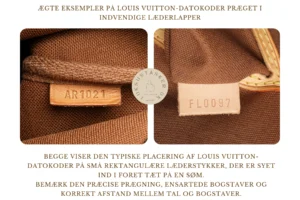
All authentic Louis Vuitton bags and wallets produced between 1982 and 2021 have date codes – a characteristic feature of this period.
However, the format of date codes has changed over time:
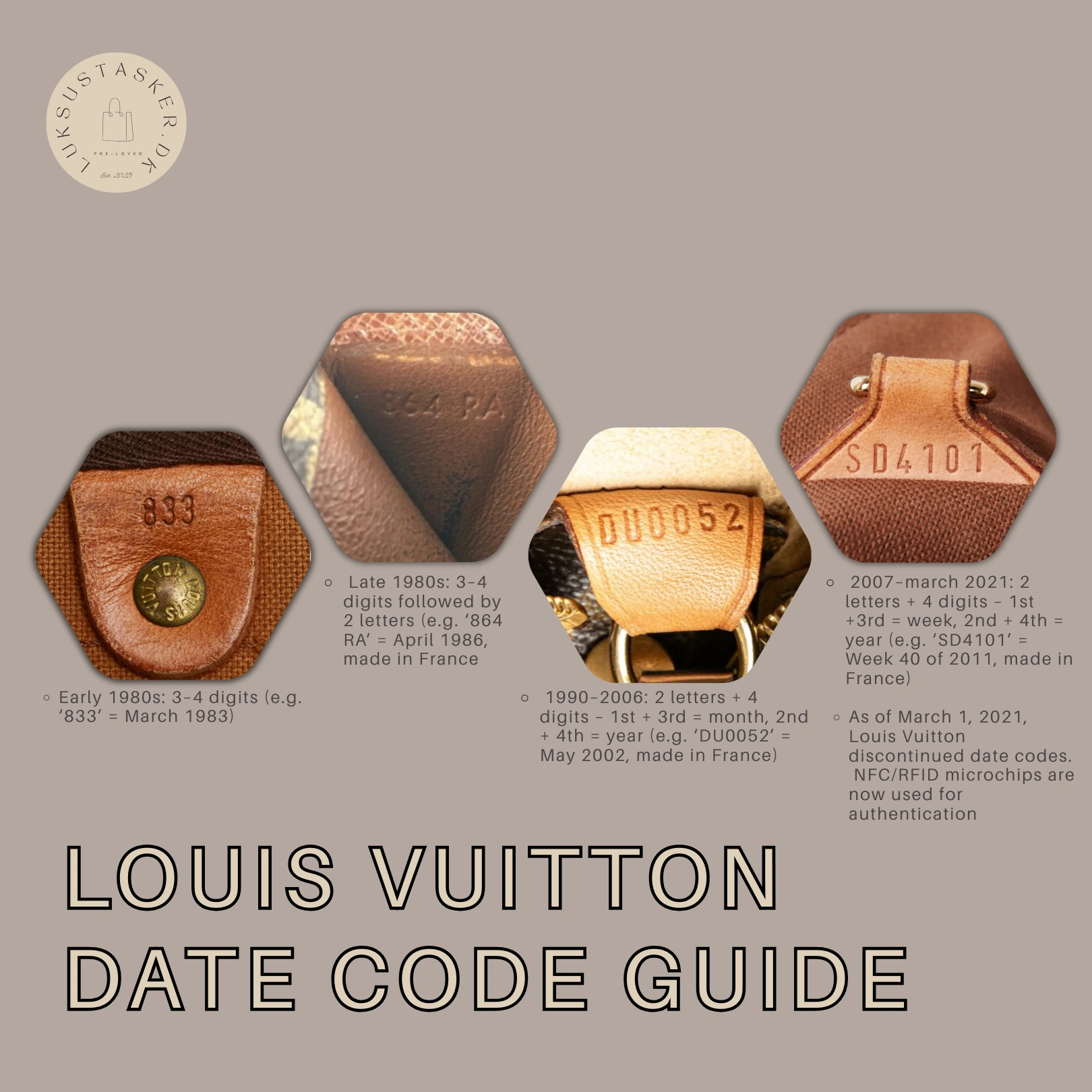
• 1982 – mid-1980s: 3–4 digits → year + month.
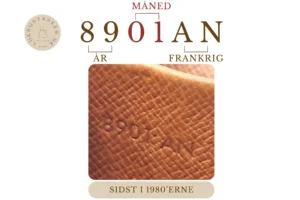
• Mid/late 1980s: 3–4 digits + 2 letters (factory/country).
– The code could be split: numbers in one place, letters in another.
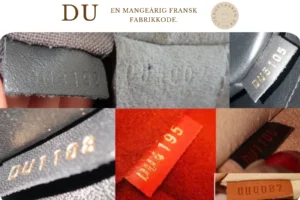
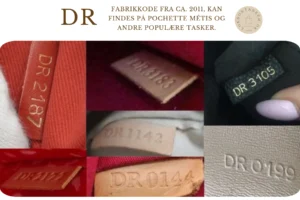
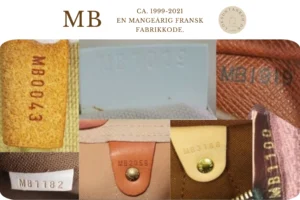
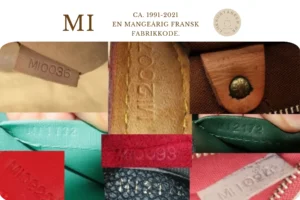
• 1990 – 2006: 2 letters + 4 digits.
– 1st & 3rd digits = month; 2nd & 4th digits = year.
• 2007 – March 2021: 2 letters + 4 digits.
– 1st & 3rd digits = week; 2nd & 4th digits = year.
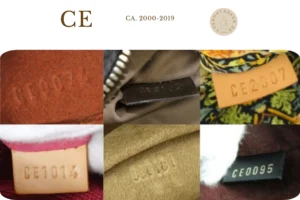
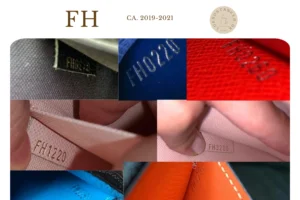
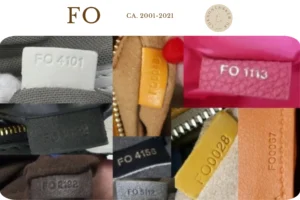
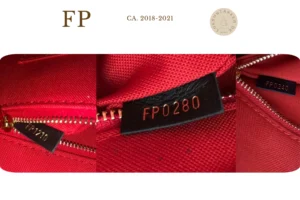
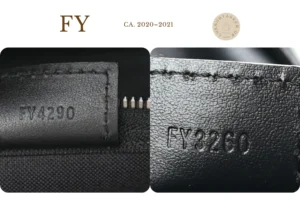
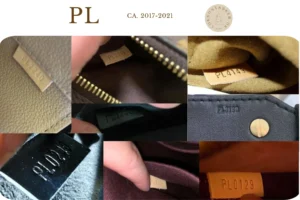
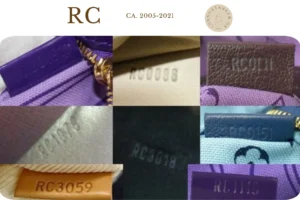
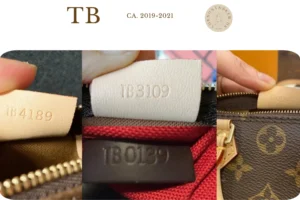
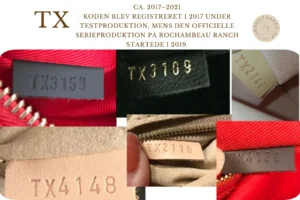
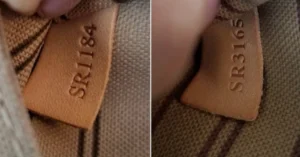
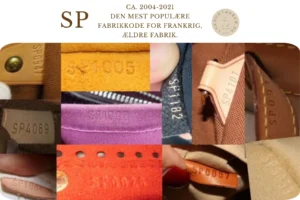
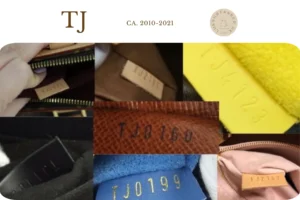
For bags produced in the USA, the following factory abbreviations are used: FC, FH, FL (most often in France, but rarely in the USA), LA (also France), OS, TX – new factory in Texas, Rochambeau Ranch, from around 2019), – as well as SD, which is the most common.
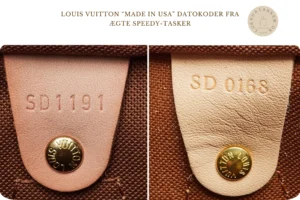
Why both SD date codes are genuine
• Correct format (2007–2021)
The codes follow Louis Vuitton’s official system after 2007, where the first and third digits indicate the week, and the second and fourth digits indicate the year:
- SD1191 → week 19, 2011
- SD0168 → week 6, 2018
• SD = San Dimas, USA
After 1995, the letters SD are used to indicate production in San Dimas, California (USA).
Both codes therefore match the “Made in U.S.A.” marking.
• Variations in font are normal
Slight differences in font, spacing and embossing technique are due to different vintages, leather types and tools.
These variations are typical of original Louis Vuitton bags.
• Consistency confirms authenticity
The date codes match the “Made in USA” marking, confirming the country of origin (San Dimas, CA).
In addition, authenticity is assessed based on several factors – including material, stitching, leather quality, stamp placement and embossing technique.
All of these elements are consistent with Louis Vuitton’s original production standards and the particular vintage, which together confirm authenticity.
“Made in U.S.A.” heat stamp
From 1995 to mid-2012, Louis Vuitton bags made in the United States were stamped with “LOUIS VUITTON PARIS made in U.S.A.” – the classic heat stamp.
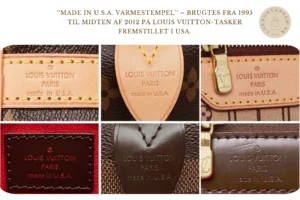
When authenticating, the factory code on the date code must always match the country on the heat stamp.
“Made in U.S.A. of imported materials” label
After 2012, Louis Vuitton replaced the heat stamp with a separate fabric or leather label that says “Made in U.S.A. of imported materials.”
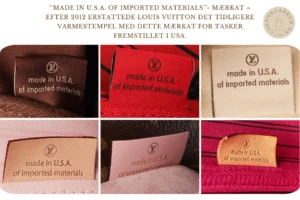
Some smaller leather goods made after 2012 no longer have a physical stamp, but only a date code (e.g. SD####) indicating the origin.
This is how it looks in practice – three models
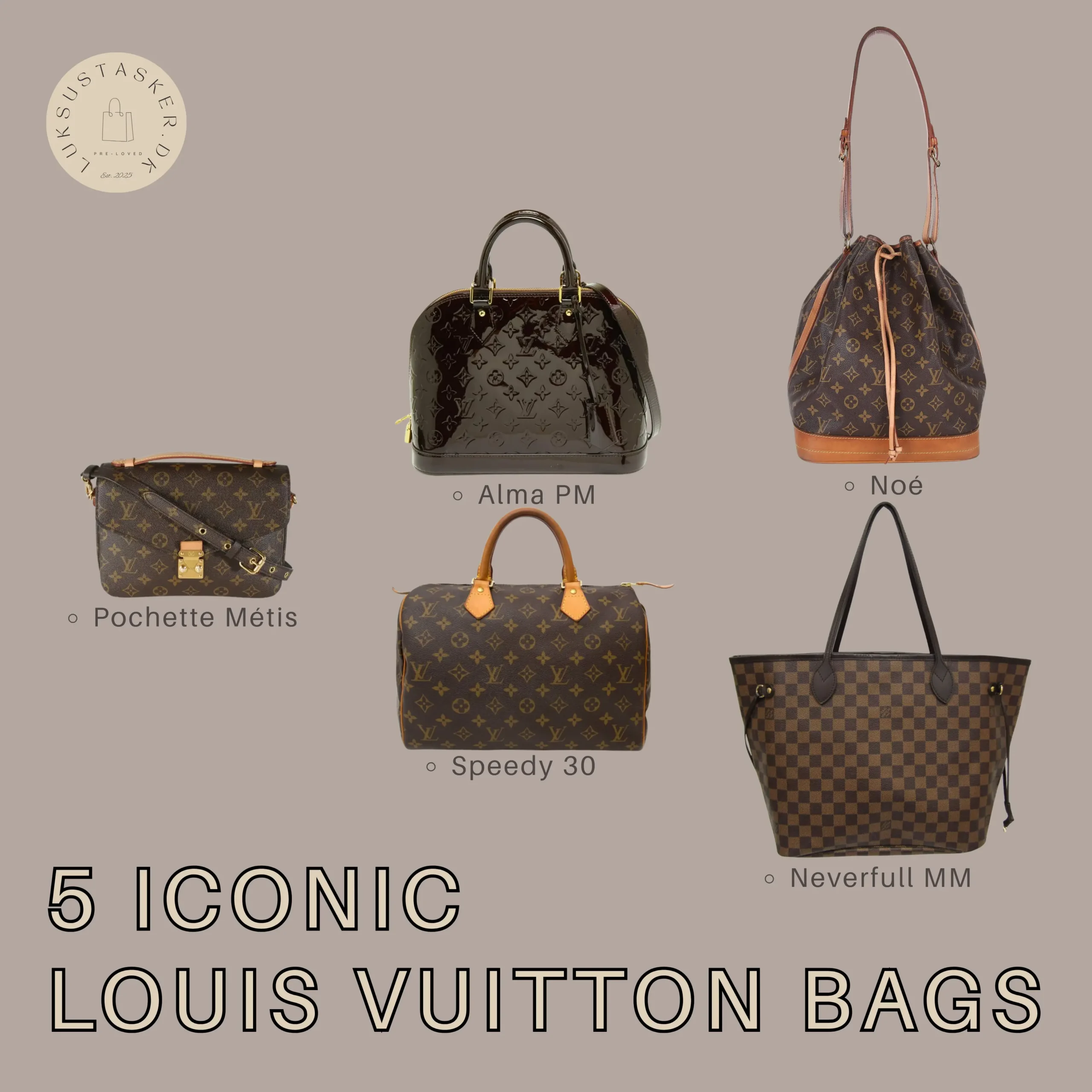
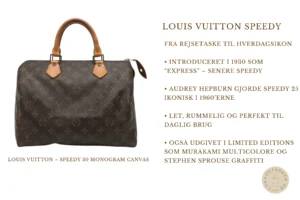
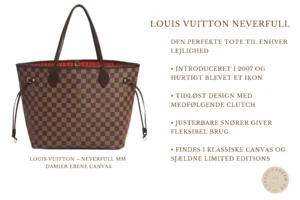
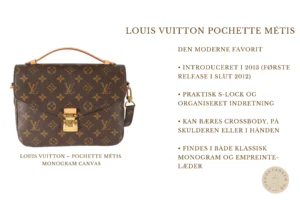
To see how these details work in practice, we show three popular models made in the USA – the Neverfull, Speedy NM and Pochette Métis.
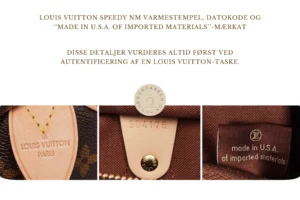
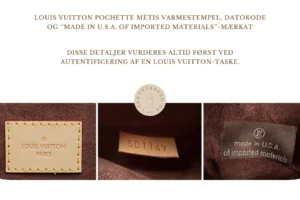
This combines the three key elements that are always assessed first during authentication: heat stamp, date code, and the label “Made in U.S.A. of imported materials.”
Louis Vuitton Neverfull heat stamp, date code and label:
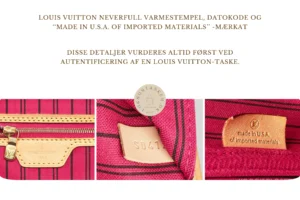
Louis Vuitton Speedy NM heat stamp, date code and label:
Louis Vuitton Pochette Métis heat stamp, date code and label:
Is there a difference in craftsmanship between countries?
No – there is no difference in quality between Louis Vuitton made in France, the USA, Italy or Spain.
All craftsmen are trained by masters to the same standards, and the materials and quality control are identical.
Some collectors prefer “Made in France” for the sake of the brand’s heritage – but the quality is the same in all workshops.
Endorsement
No matter where in the world your Louis Vuitton is made, it carries the same craftsmanship heritage and attention to detail –
and that is precisely what makes the brand timeless: an icon of quality, history and enduring beauty.
8. Conclusion – What does “Made in” mean today?
From the historic atelier in Asnières to the modern workshops in Europe and the USA, Louis Vuitton’s journey testifies to a rare balance between heritage, innovation and global presence.
For the consumer, insight into origin, markings and craftsmanship provides a deeper understanding of the quiet luxury that continues to characterize Louis Vuitton – a luxury that is built on time, skill and authenticity.
At luksustasker.dk, we evaluate each Louis Vuitton bag based on more than 30 verifiable parameters – including leather type, stitching, hardware, logo, structure and markings.
Our experience covers both vintage models and newer limited editions, and our goal is to create full transparency and security for you as a buyer – both online and in the showroom in Aalborg.
How to recognize a genuine Louis Vuitton bag – materials, logo, stitching and data codes.
All about Louis Vuitton date codes – and why they are not always proof of authenticity

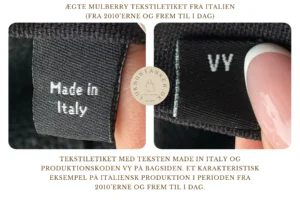
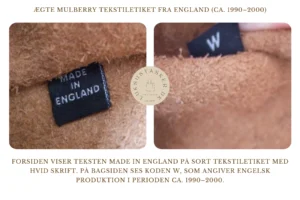 The code W is one of the typical examples that can be found on the back of the black textile label in bags made in England in the period approx. 1990–2000.
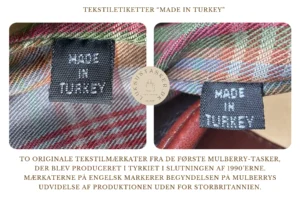
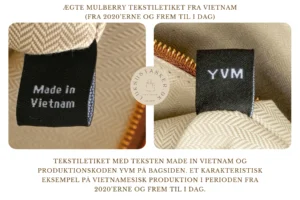
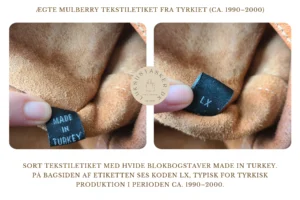 The code LX is one of the typical examples that can be found on the back of the black textile label in bags made in Turkey in the period approx. 1990–2000.
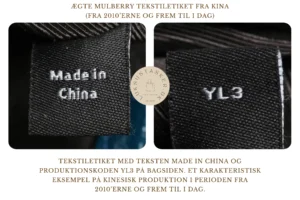
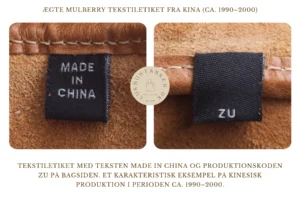 The code ZU is one of the typical examples that can be found on the back of the black textile label in bags made in China in the period approx. 1990–2000.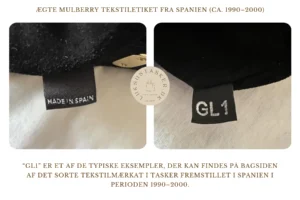
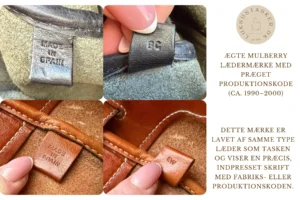
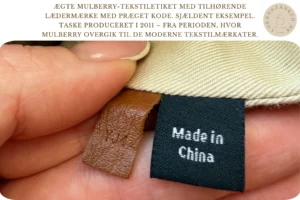
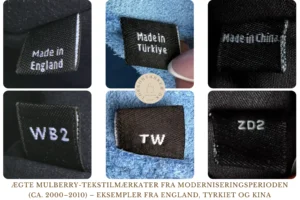
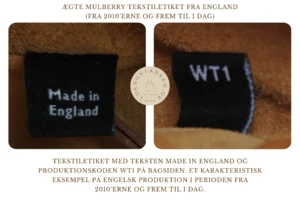
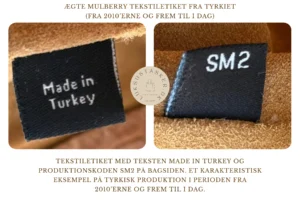
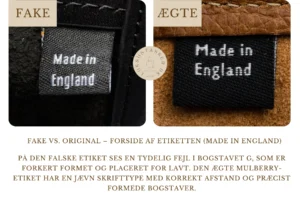
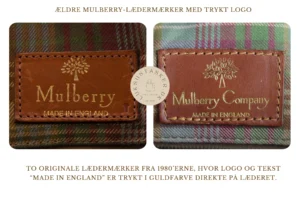
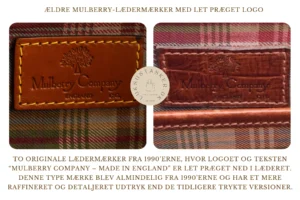
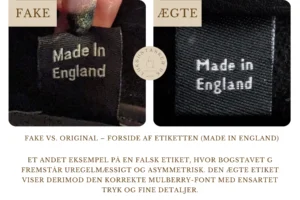 The examples here show labels with the text Made in England, where the fake fonts differ clearly from the original Mulberry font and appear less precise in the details.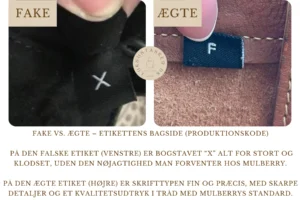



















 List of Louis Vuitton date codes (Made in Italy)