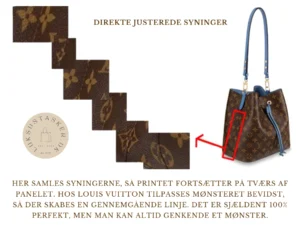
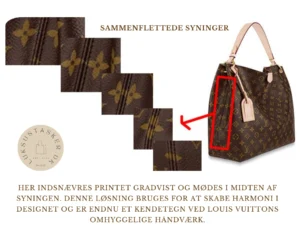
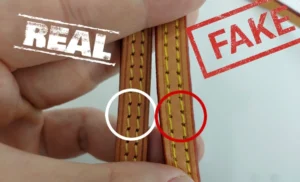
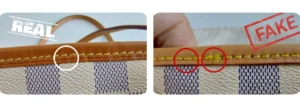
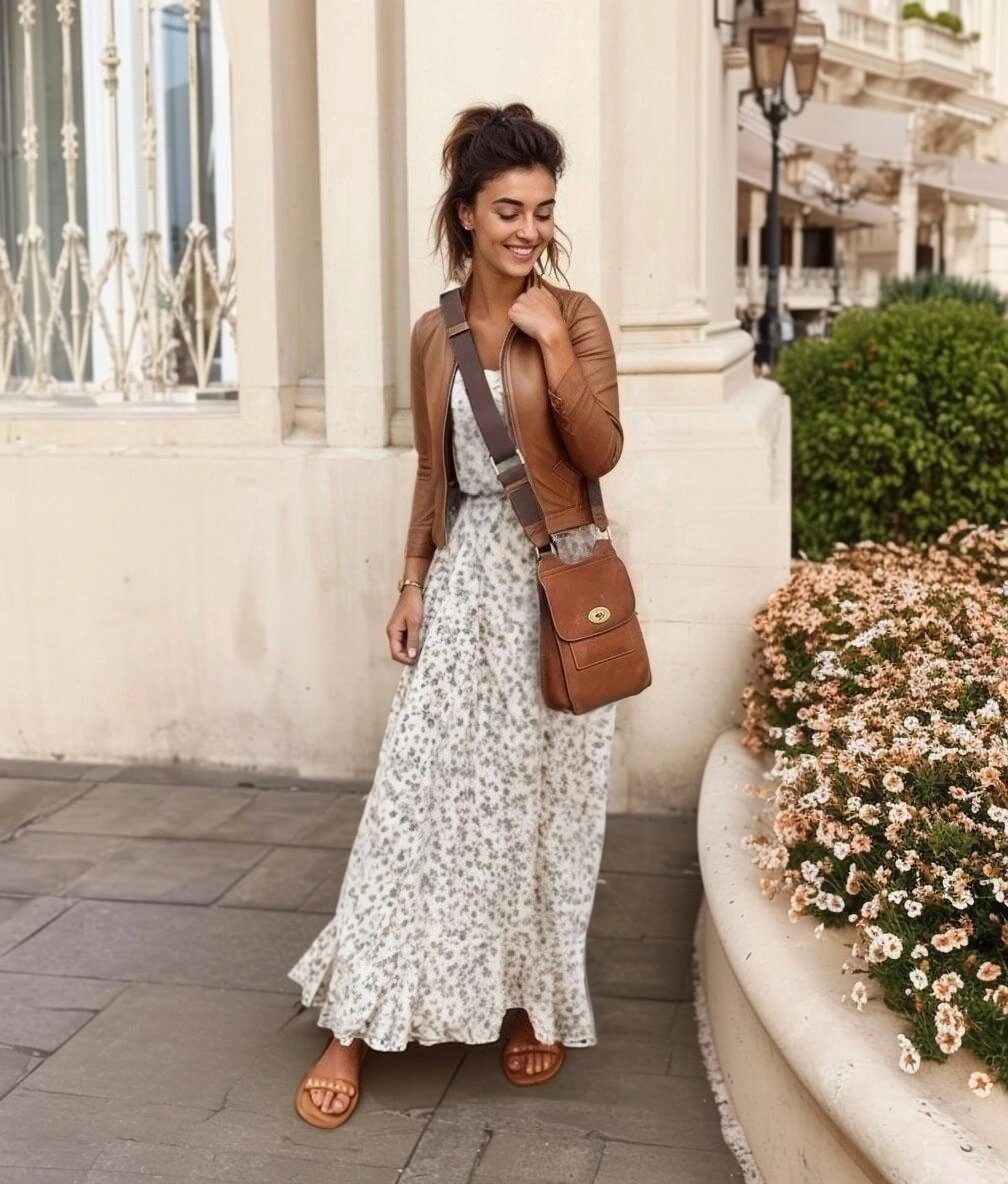
Are Louis Vuitton bags still worth the money in 2025?

An expert assessment of design, quality, durability and resale value – with a focus on pre-loved

Louis Vuitton is undoubtedly one of the world’s most iconic luxury brands. But as prices rise and consumers’ focus shifts towards sustainability and value for money, many are asking themselves: Are Louis Vuitton bags still a good investment in 2025? The answer is a clear yes – but only if you know what to look for.

At luksustasker.dk we specialize in pre-loved Louis Vuitton and Mulberry, and in this article we delve into the most important reasons why the bags are still worth the money – both in terms of style and value.

You will get a thorough expert assessment of timeless design, materials, craftsmanship, sustainability and resale value – and we give you concrete examples of popular models that hold their price over time.

Whether you are a first-time buyer or an experienced collector, we will help you make the right choice, based on experience, market knowledge and quality.

In this guide we will review:

  1. Timeless design that never goes out of style
  2. Quality and craftsmanship in a class of its own
  3. Sustainability and conscious consumption
  4. Resale value and investment
  5. Expertise makes the difference
  6. Popular models that will hold their value in 2025
  7. Conclusion

1. Timeless design that never goes out of style

Louis Vuitton bags are known for their balance between elegance and functionality – and many models have been loved for decades:

  • Speedy and Neverfull are still among the most sought-after bags in the world
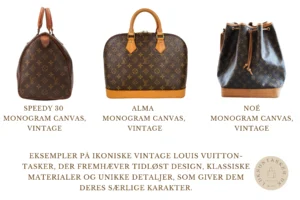
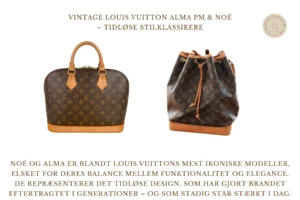
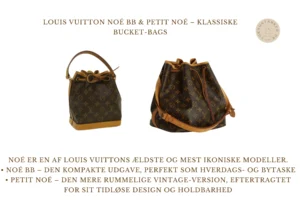
  • Vintage models such as Noé, Alma and Looping have become true style classics
  • The iconic Monogram canvas is recognizable globally and is associated with timeless luxury

This makes the bags a long-lasting part of the wardrobe – regardless of trends and seasons.

2. Exceptional quality and craftsmanship

Louis Vuitton uses materials and techniques that are built to last:

  • Canvas is durable and resistant to both weather and use
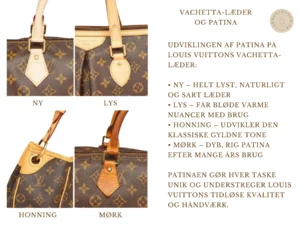
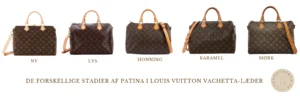
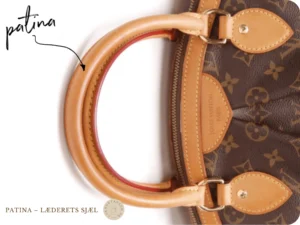
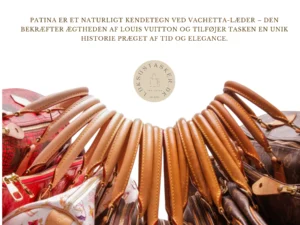
  • Vachetta leather develops a beautiful patina that makes each bag unique
  • Hardware in solid brass or other quality alloys ensures function and finish

With proper care, a Louis Vuitton bag can last for decades – and still look amazing.

At luksustasker.dk we always assess the condition and patina of the materials so you know what you are getting.

3. Sustainability and conscious consumption

In 2025, sustainability is more important than ever. When you choose a pre-loved Louis Vuitton bag:

  • You reduce your carbon footprint and support the circular economy
  • You give new life to quality products that deserve to be used again
  • You make a conscious choice that combines style and responsibility

At luksustasker.dk, we only handpick bags in high condition – and guarantee their authenticity and quality.

4. Resale value and investment

Louis Vuitton bags hold their value surprisingly well – and some models even increase in price over time:

  • Discontinued models and limited editions are particularly sought after by collectors
  • Vintage bags with original lining and genuine date codes are popular investment objects
  • Pre-loved LV bags typically cost significantly less than new ones – but still retain a high resale value

At luksustasker.dk we follow price developments closely and know which models are worth keeping an eye on.

5. Expertise makes the difference

When you buy pre-loved, authenticity and condition are crucial. At luksustasker.dk, each bag is thoroughly assessed:

  • We use UV light, a magnifying glass and special equipment to check leather, embossing and lining
  • We review date codes, stitching, hardware and logo
  • We discard bags with unoriginal details, altered lining or unknown repairs

💡 You can feel completely safe knowing that the bag is both 100% authentic and carefully described in terms of condition and details.

Popular models that hold their value in 2025

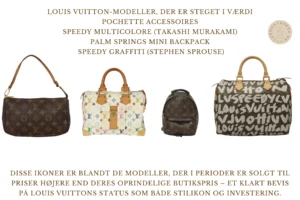
Louis Vuitton is known for timeless design, strong quality and high resale value. In 2025, both classic and vintage models are among the most sought-after – and they hold their value extremely well on the second-hand market.

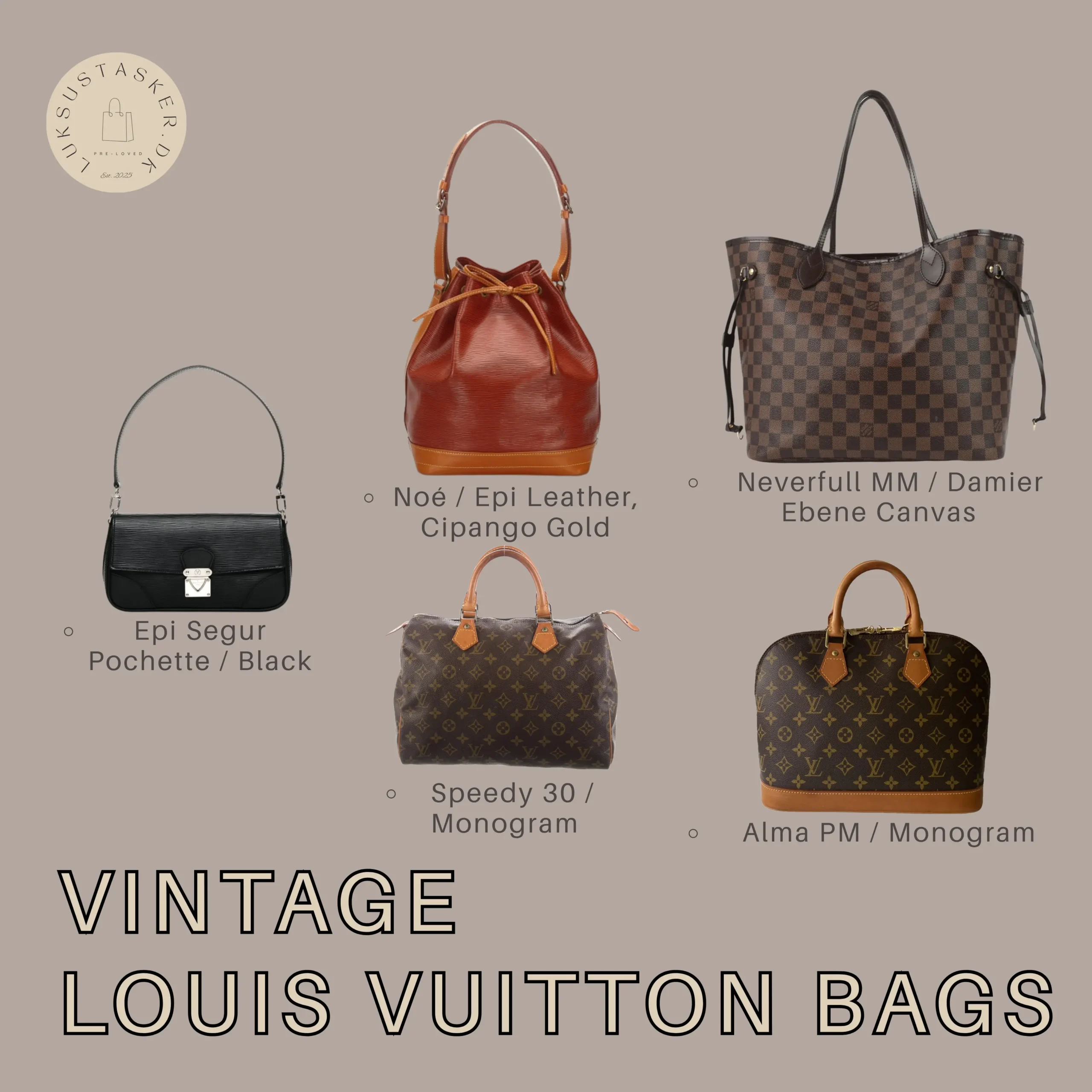
Here are some of the models we most often see in trade at luksustasker.dk:

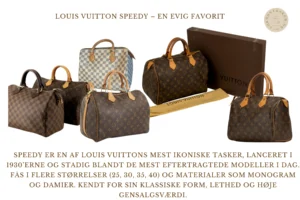
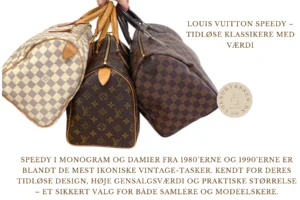
Speedy 25 & 30 – iconic handbags in Monogram or Damier, loved for their classic silhouette and practical size


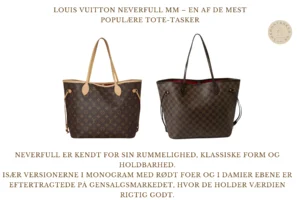
Neverfull MM – a modern classic, especially popular with the characteristic red lining


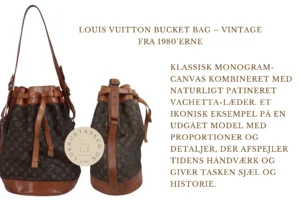
Noé BB & Petit Noé (vintage) – originally created as a champagne bag, today a timeless bucket bag with iconic lace closure


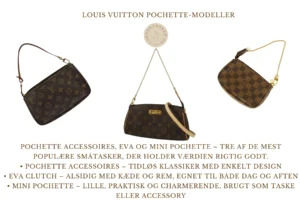
Pochette Accessoires & Mini Pochette – small favorites, perfect for both everyday life and parties


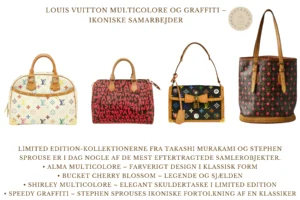
Multicolore & Graffiti – limited edition collections in collaboration with Takashi Murakami and Stephen Sprouse, today sought-after collector’s items


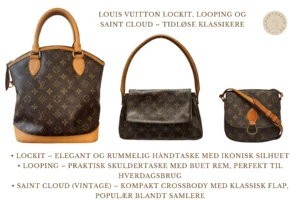
Lockit, Looping & Saint Cloud (vintage) – classic designs that unite Louis Vuitton’s heritage with timeless vintage expression

💡Louis Vuitton models are not just bags, but investments in craftsmanship, history and style – and that’s why they hold their value year after year.

Conclusion: Yes – Louis Vuitton is still worth the money

If you want style, quality and long-lasting luxury, Louis Vuitton bags are still among the best choices in 2025. Especially when you choose pre-loved, you get much more for your money – without compromising on aesthetics, authenticity or sustainability.

At luksustasker.dk we are happy to help you find the right model – based on your needs, your style and your budget.

About this guide

The information in this guide is intended solely as a guide and is based on publicly available information, industry sources, collector archives, authentication databases as well as applicable Industry Authentication Standards and many years of experience with authentic Louis Vuitton bags.

Should you buy now – or wait?

The market for pre-loved Louis Vuitton bags is in flux.

Some models are becoming rare and increasing in value quickly – others are still available at strong prices.

Contact us at luksustasker.dk for honest and personal advice on when and what you should buy.

We will guide you to a purchase that you will be happy with for many years.

Also read:

Do you need help finding the right Louis Vuitton?

Explore our selection of pre-loved models in the shop:

See all bags here

Or contact us directly for personal advice.

We will help you find exactly the model that matches your style, your needs and your budget – whether you are a first-time buyer or an experienced collector.


Made in France… or? Where are Louis Vuitton bags produced today?

From Asnières to Texas: A Guide to Louis Vuitton Production and Craftsmanship

Louis Vuitton is associated with French luxury and iconic design.

Today, Louis Vuitton is a global manufacturer of leather goods — no longer just from France.

The brand operates its own workshops in several countries, and markings such as “Made in France”, “Made in Spain”, “Made in Italy” and “Made in USA” appear on original Louis Vuitton products.

These markings reflect not only the origin, but also Louis Vuitton’s development as a global artisan brand.

In this guide, we take a closer look at how production is organized – and show specific examples of what the different markings look like in practice.

This guide is for informational purposes only and is based on publicly available information, industry sources, collector archives, authentication databases, applicable Industry Authentication Standards and many years of experience with authentic Louis Vuitton bags.

In this guide we will cover:

  1. Where are Louis Vuitton bags made today?

  2. Louis Vuitton authentication – genuine heat stamps with and without “made in”

  3. Vintage Louis Vuitton (before 1990)

  4. The French Luggage Company (USA, ca. 1976–1991)

  5. Date codes and microchips 

  6. Date codes and microchips 

  7. Sustainability and craftsmanship

  8. Quality and authentication of pre-loved models

  9. Conclusion – What does “Made in” mean today?

1. Where are Louis Vuitton bags produced today?

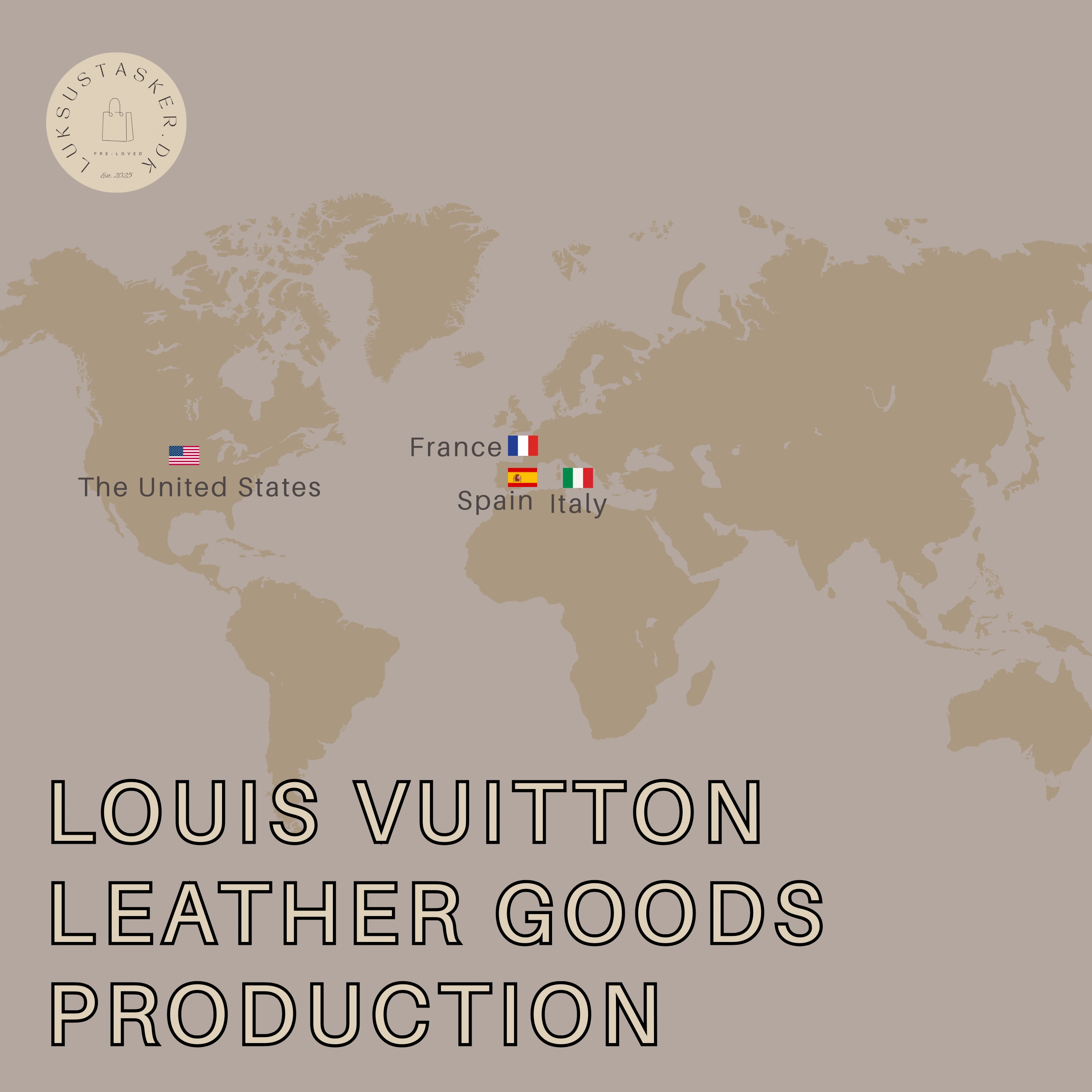
According to Louis Vuitton’s official information, the company’s leather goods are manufactured in its own workshops in France, Spain, Italy and the USA.
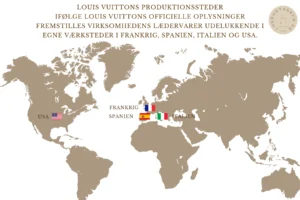
France

Production includes, among others: the historic atelier in Asnières-sur-Seine (established 1859) and workshops in Vendôme (Abbaye & Oratoire), Beaulieu-sur-Layon, Saint-Pourçain-sur-Sioule, Juilley / Ducey-les-Chéris, Sainte-Florence / Essarts-en-Bocage and La Merlatière.

Spain

In Catalonia, there are several production units — three in Barberà del Vallès and workshops in Girona and Santa Perpètua de Mogoda.

Italy

In Tuscany, Louis Vuitton operates workshops in Pontassieve (Le Sieci) and Rignano sull’Arno.

USA

In 2019, Louis Vuitton opened the Rochambeau Ranch facility in Texas (Keene / Alvarado).

Previously, the brand had production in San Dimas and Irwindale, California; the current status of these workshops has not been publicly confirmed.

Why production in several countries?

Louis Vuitton is gradually expanding its production capacity to preserve the tradition of craftsmanship and meet growing demand.

All workshops work to the same standards of quality and training, and craftsmen are trained through Écoles Louis Vuitton – the brand’s own training centers.

A bag made in Spain or the USA therefore has the same precision and quality as a “Made in France” model.

2. Louis Vuitton authentication – genuine heat stamps with and without “made in”

Louis Vuitton uses several types of official heat stamps depending on the year of production and workshop.

The classic heat stamps show the text “made in” followed by the country of production, while newer models may instead have an embedded microchip without visible “made in” text.

Below are documented examples of genuine Louis Vuitton heat stamps – both classic and modern versions.

All examples follow Louis Vuitton’s official production standards and are used exclusively on authentic bags.

Genuine example of heat stamp “Louis Vuitton Paris – made in France”
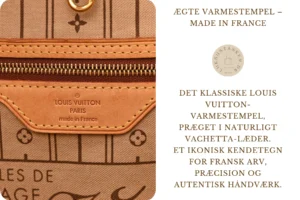
This is the most iconic and historic embossing used on bags produced in Louis Vuitton’s French workshops.

France is the brand’s original homeland, where production began in Asnières in 1854 – and many of its most famous models, such as the Speedy, Alma and Neverfull, are still made here.

The heat stamp is embossed into natural vachetta leather with precise typography and even embossing – a hallmark of authentic Louis Vuitton craftsmanship.

The “Made in France” stamp has been used since the 1980s and is still found on both classic and newer models, even after the introduction of microchips in 2021.

This embossing is a sure sign of genuine origin and Louis Vuitton’s historic quality.

💡Expert tip: On genuine French heat stamps, the embossing is always centered, the letters are evenly spaced, and the “O” in LOUIS is almost perfectly round – even small deviations here are often signs of copies.

Authentic example of a “Louis Vuitton Paris – made in Spain” heat stamp
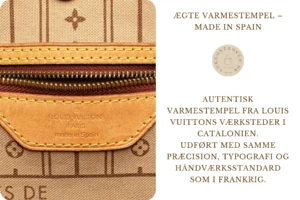
Louis Vuitton has had official workshops in Spain since the 1990s, primarily for the production of small leather goods and bags in the Monogram and Damier series.

Production takes place under the same control and quality standards as in France, and the “Made in Spain” heat stamp is therefore fully authentic.

The embossing is typically slightly deeper in the leather, but done with the same typography and accuracy as in the other LV workshops.

Spain today plays a central role in Louis Vuitton’s European production and represents modern, high-quality craftsmanship.

💡Expert tip: Genuine Spanish heat stamps may vary slightly in the color tone of the leather, but the lines remain sharp.

If the letters appear “smeared” or irregular, it is a warning sign.

Genuine example of a heat stamp “Louis Vuitton Paris – made in Italy”
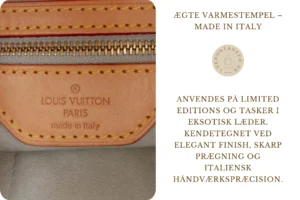
Italian workshops are used especially for limited editions, runway collections and models in exotic leather.

“Made in Italy” acts as a seal of quality, associated with precision, luxury and craftsmanship.

The workshops are located in northern Italy and work closely with Louis Vuitton’s design teams in France to ensure identical quality and finish.

This embossing is hot-stamped on high-quality leather with sharp letters and even spacing – details that are often missing from counterfeit products.

Authentic Italian LV bags are considered among the most refined in the brand’s current collections.

💡Expert tip: On authentic Italian heat-stamps, the letters are very precisely embossed with a slight sheen.

Replicas often show uneven embossing or dull color that fades quickly.

A real example of a heat stamp “Louis Vuitton Paris – made in U.S.A.”
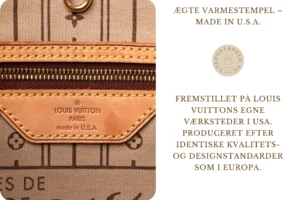
Since the 2010s, Louis Vuitton has had its own workshops in the United States to manufacture bags and accessories for the North American market.

Production takes place under the same global standards as in the European workshops, and the “Made in U.S.A.” heat stamp is therefore an official and authentic LV mark.

Bags with this embossing have the same typography, embossing and quality as models produced in France.

Louis Vuitton confirms that all workshops – regardless of country – work according to identical Industry Authentication Standards, so the quality is always the same.

💡Expert tip: Genuine American heat stamps may be slightly deeper embossed into the leather than European ones,

but the letter spacing and typography remain consistent.

Genuine example of a “Louis Vuitton Paris” heat stamp (without “made in”)
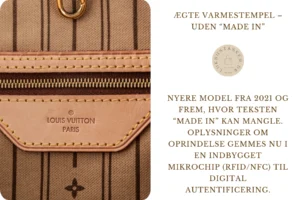
This heat stamp is found on certain newer models, produced from 2021 onwards, when Louis Vuitton began introducing microchips (RFID/NFC) as a replacement for date codes.

Some bags lack the “made in” text because information about the country of manufacture and serial number is now recorded in the chip, which can only be read by Louis Vuitton itself.

However, according to experts and sources such as Rebag, Bagaholic and Couture USA, many newer bags still have the traditional “made in” embossing – especially classic models such as Speedy, Neverfull and Alma.

During the transition period, models are therefore available both with and without “made in”, depending on the year, model and workshop – both types are fully authentic.

The location of the “Louis Vuitton Paris” logo may vary slightly between models, but the typography and embossing remain identical.

The absence of “made in” is therefore not a sign that the bag is fake, but part of Louis Vuitton’s transition to digital authentication.

💡Expert tip: On newer heat stamps without “made in”, the correct typography is crucial – the letters should be evenly placed, precisely embossed and without excess pressure.

Notes on Heat Stamps – The Expert’s Checklist

For an accurate assessment of Louis Vuitton heat stamps, the following points can help you understand the variations and typical characteristics:

  • Typography and capitalization:

LOUIS VUITTON PARIS is always embossed in capital letters, while the made in line is in lowercase.
The country is written with a capital letter (e.g. made in France / made in Spain / made in Italy), and the U.S.A. is indicated with periods.

  • Registration symbol (®):

® may appear above LOUIS on some models and be absent on others.
This depends on the vintage and product series and is not in itself a sign of authenticity or a copy.

  • Blind vs. foil embossing:

On classic vachetta leather models, blind embossing (without color) is typically used.
On some materials such as Vernis and Empreinte, the embossing can be done with gold or silver foil – both types are officially used by Louis Vuitton.

  • Placement of the heat stamp:

The location may vary depending on the model and year – for example in an inside pocket, on a leather patch or in the lining.
The absence of the embossing in an expected place is not automatically a sign of a copy – always assess the whole.

  • Date code or microchip:

Bags produced between 1982 and March 2021 have a date code that must match the country on the heat stamp.

From 2021 onwards, Louis Vuitton is gradually using microchips (RFID/NFC), and some models therefore lack the visible “made in” text.

  • Specifically for USA production:

Certain American models, especially after 2012, may have a separate label with the text
“Made in U.S.A. of imported materials”.
This label is used officially and does not replace the heat stamp, but complements it.

3. Vintage Louis Vuitton (before 1990)

Before 1990, the majority of Louis Vuitton bags and accessories were created in France – specifically in the historic atelier in Asnières, where the brand’s heritage and craftsmanship took shape.

Here, the story began with suitcases and travel bags, designed for the elegant travel culture of the time.
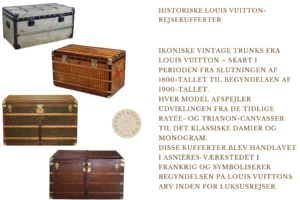
The iconic Monogram and Damier canvases laid the foundation for the handbags that would later define Louis Vuitton’s timeless style.

Vintage models from this period still carry the legacy of the early collections:

brass hardware, natural vachetta leather and the beautiful patina that develops over the years.
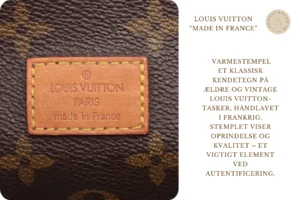

These details tell the story of Louis Vuitton’s evolution – from classic travel suitcases to iconic bags that continue to symbolize craftsmanship, quality and French elegance.
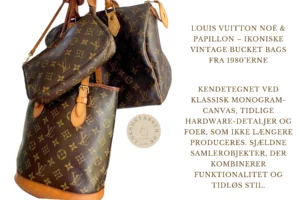
Although the main production remained in France, some products were made for special export markets – including rare examples marked “Made in Germany”, primarily small accessories.
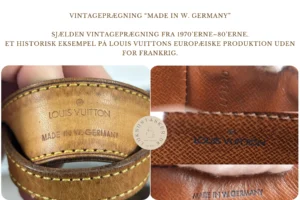
These are considered rare collector’s items and were not part of Louis Vuitton’s serial production.

Vintage Features

  • Natural vachetta leather with darker patina
  • Hand-stitched details with waxed thread
  • Heavy brass hardware
  • Older logo embossing with thinner font

These features help identify the model, age, and origin.

4. The French Luggage Company (USA, c. 1976–1991)

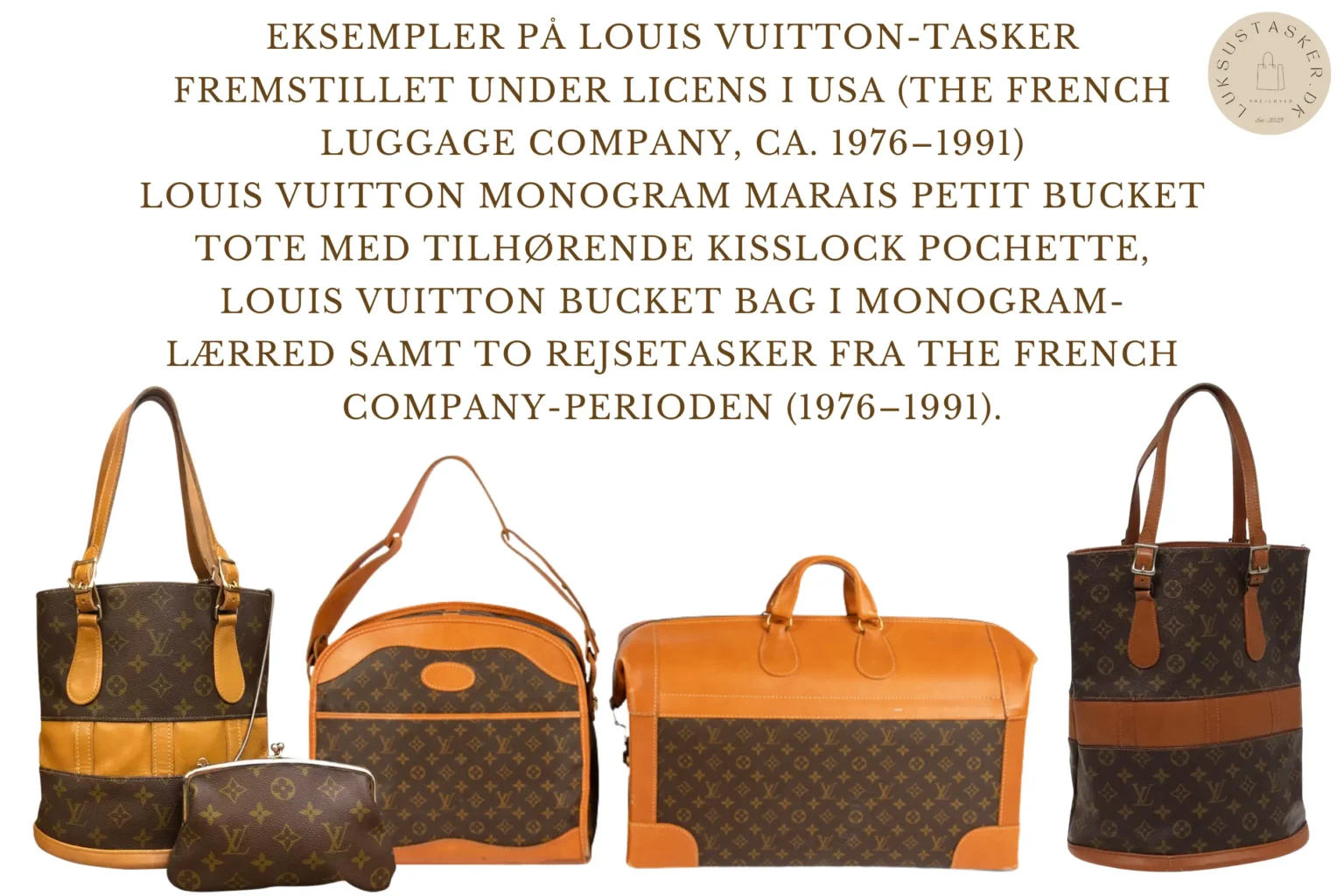
During this period, Louis Vuitton entered into a licensing agreement with the American manufacturer The French Luggage Company, which manufactured bags for the American market under official authorization.

The agreement was established to meet customs regulations and ensure faster distribution in the United States.

The bags were sold through luxury stores such as Saks Fifth Avenue, Neiman Marcus, and Myers.
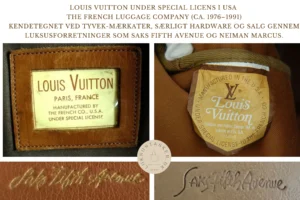
Characteristic features of these models:

  • Tyvek labels instead of leather labels
  • Absence of date codes
  • Special hardware and zippers

These models differ in construction, but are considered authentic licensed editions of the period by collectors.

5. Date codes and microchips 

Authentic Louis Vuitton bags have an internal stamp indicating the country of origin — “Made in France”, “Made in Spain”, “Made in Italy”, “Made in USA” or more recent heat stamp — without “Made in” (Louis Vuitton Paris)

Since 1982, Louis Vuitton has used date codes, which combine letters and numbers to indicate the place and period of production.

The format of these codes has changed several times over the years, but has always served as an internal reference point for production.

Starting March 1, 2021, Louis Vuitton began gradually introducing microchips (NFC/RFID) instead of the traditional date codes.

This technology is used in newer models and allows internal tracking and authenticity checks through Louis Vuitton’s own systems.

According to industry sources, the chip stores information about the production, but this data is not publicly available to the consumer.

You can read more about the evolution of date codes from 1982 to the transition to microchips (NFC/RFID) in this article.

What you should know?

• The embossing (“Made in …”) must be clear, precise and correctly placed.

• The date code must match both the country and the period.

(Check: Compare the date code with the “Made in …” stamp and other signs of authenticity such as materials, stitching and hardware.)

• The absence of a date code does not necessarily mean that the bag is fake — newer models may be equipped with a chip instead.

• Always evaluate the bag as a whole — logo, hardware, materials (canvas, leather), stitching, inner lining, transitions and even the scent.

💡Expert tip: The introduction of microchips in Louis Vuitton products is part of LVMH’s digital initiative for authenticity and traceability.

Since 2021, Louis Vuitton has been part of the Aura Blockchain Consortium – a collaboration between LVMH, Prada and Cartier – which aims to create secure, digital passports for luxury products using blockchain and NFC technology.

6. Sustainability and the future of craftsmanship

Louis Vuitton is committed to sustainability and the training of artisans.

In France, Italy and Spain, the brand has established Écoles Louis Vuitton – training centers where new generations are trained in traditional leather techniques combined with modern production.

The brand participates in the LVMH group’s LIFE 360 initiative, which focuses on material recycling, energy-efficient workshops and CO₂ reduction.

The company also supports projects such as Artisans for the Future and Circular Creativity, which promote responsible luxury production.

The goal is to combine classic craftsmanship with modern sustainability – and ensure that future production preserves Louis Vuitton’s heritage and quality.

7. Quality and authentication of pre-loved models

When you buy a pre-loved Louis Vuitton, it’s not just about authenticity – it’s also about understanding the craftsmanship behind it.

It’s the quality of the details that often reveal how well the bag has retained its shape and beauty over the years.

Louis Vuitton was created as a symbol of durability. The brand’s bags don’t just have to look flawless – they have to maintain their elegance and structure for decades.

That’s why each model undergoes a thorough quality control before it leaves the workshop. Even the smallest details are checked manually: stitching, zippers, edges and hardware.

These standards apply to all Louis Vuitton workshops worldwide and are at the very core of the brand’s DNA – precision, aesthetics and attention to every detail.

What to look for

When evaluating a used Louis Vuitton model, you should especially look for:

• Materials – coated canvas and natural vachetta leather, which over time acquire a beautiful patina.

• Symmetry – the monogram should be centered and the pattern aligned along the seams.

• Stitching – even, tight and without loose threads.

• Hardware and logo – sharp engravings and precise placement.

• Date code – compare the date code with the “Made in …” stamp, and check the font.

• Fragrance – genuine Louis Vuitton has a light leather scent – ​​never sharp or chemical.

At luksustasker.dk, we combine a passion for craftsmanship with many years of experience.

Each bag undergoes a thorough check of authenticity and condition to ensure that it lives up to the high standards that characterize Louis Vuitton.

A genuine Louis Vuitton is an icon of craftsmanship – built to last and loved for its history.

Concrete examples of Louis Vuitton bags from the USA

To illustrate how Louis Vuitton ensures consistent quality across workshops, let’s take a closer look at a concrete example: production in the USA.

Here, the brand clearly shows how details such as heat stamps, date codes and labels play a central role in authentication.

LV factory location codes & date codes

Reading a Louis Vuitton date code is the first step in authentication.

Before our experts assess the condition, the date code is checked – it tells both the place and time of production.

All authentic Louis Vuitton bags and wallets produced between 1982 and 2021 have date codes – a characteristic feature of this period.

However, the format of date codes has changed over time:

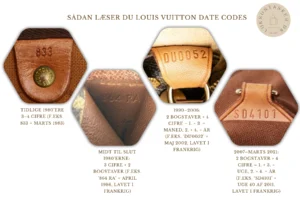
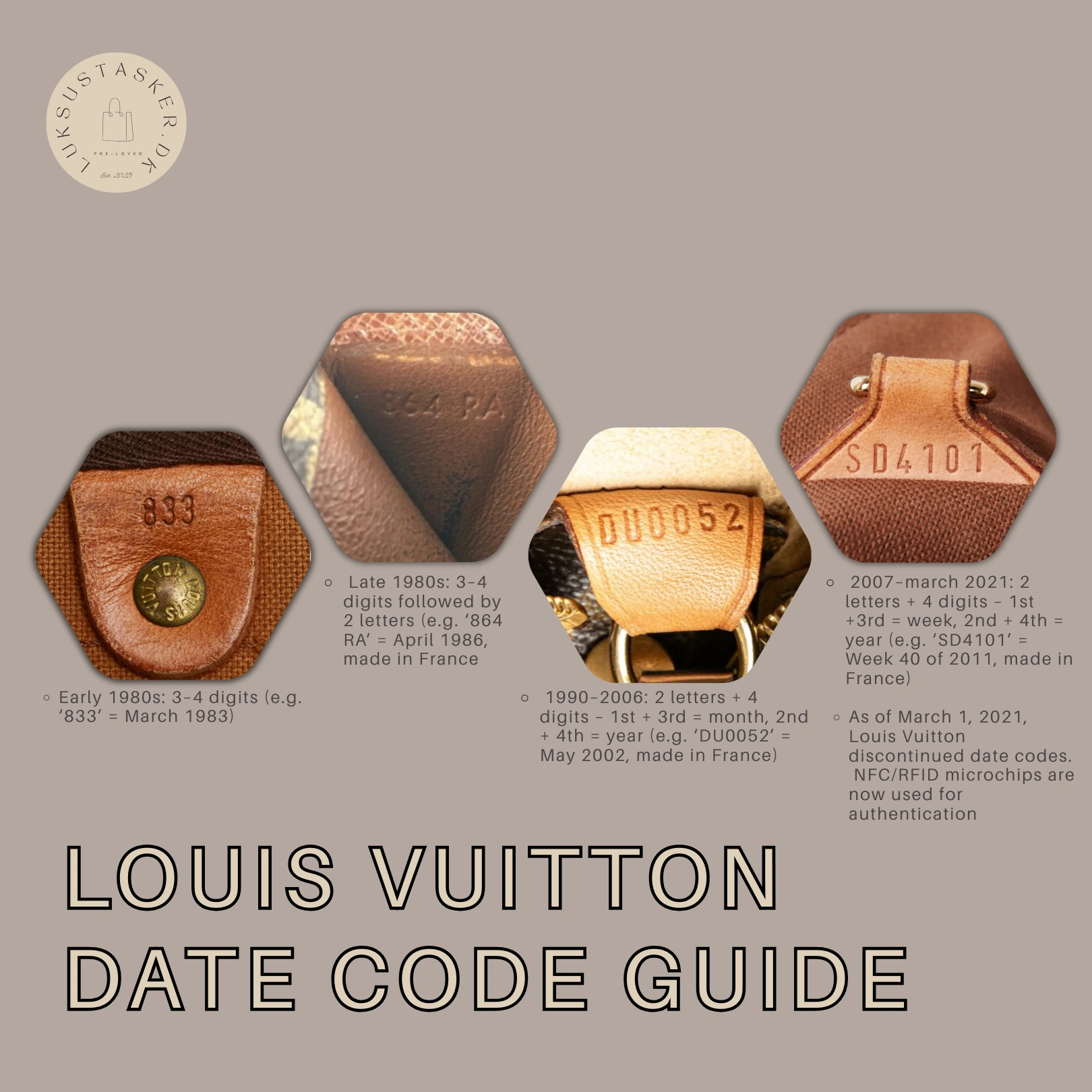
• 1982 – mid-1980s: 3–4 digits → year + month.

• Mid/late 1980s: 3–4 digits + 2 letters (factory/country).

– The code could be split: numbers in one place, letters in another.

• 1990 – 2006: 2 letters + 4 digits.

– 1st & 3rd digits = month; 2nd & 4th digits = year.

• 2007 – March 2021: 2 letters + 4 digits.

– 1st & 3rd digits = week; 2nd & 4th digits = year.

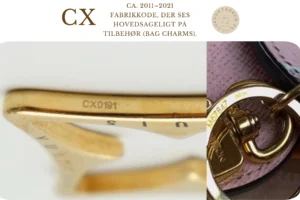
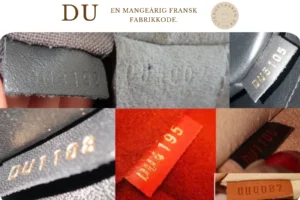
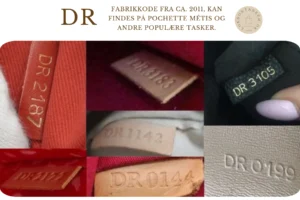
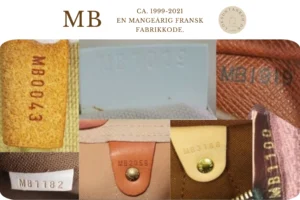
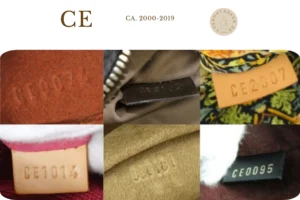
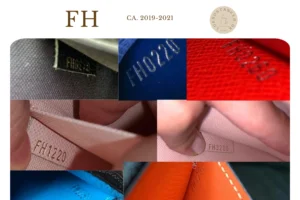
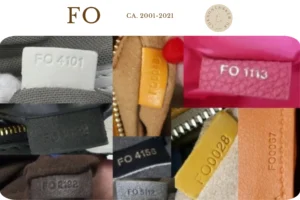
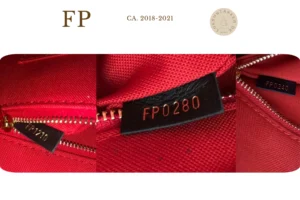
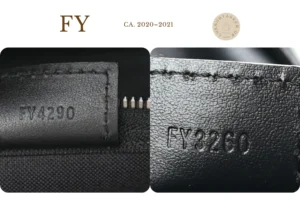
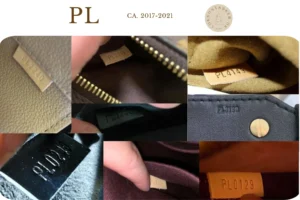
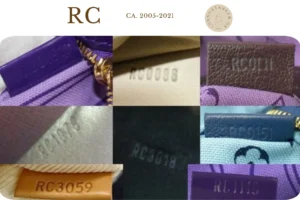
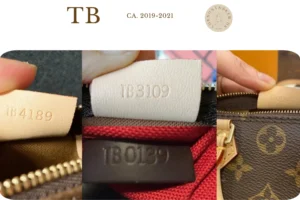
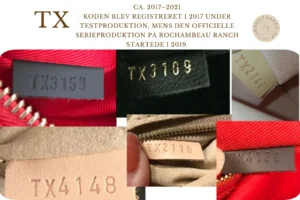
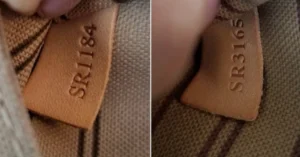
For bags produced in the USA, the following factory abbreviations are used: FC, FH, FL (most often in France, but rarely in the USA), LA (also France), OS, TX – new factory in Texas, Rochambeau Ranch, from around 2019),  – as well as SD, which is the most common.
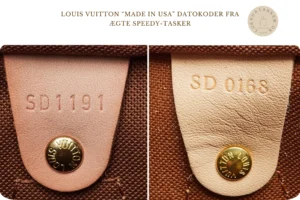
Why both SD date codes are genuine

• Correct format (2007–2021)

The codes follow Louis Vuitton’s official system after 2007, where the first and third digits indicate the week, and the second and fourth digits indicate the year:

  • SD1191 → week 19, 2011
  • SD0168 → week 6, 2018

• SD = San Dimas, USA

After 1995, the letters SD are used to indicate production in San Dimas, California (USA).

Both codes therefore match the “Made in U.S.A.” marking.

• Variations in font are normal

Slight differences in font, spacing and embossing technique are due to different vintages, leather types and tools.

These variations are typical of original Louis Vuitton bags.

• Consistency confirms authenticity

The date codes match the “Made in USA” marking, confirming the country of origin (San Dimas, CA).

In addition, authenticity is assessed based on several factors – including material, stitching, leather quality, stamp placement and embossing technique.

All of these elements are consistent with Louis Vuitton’s original production standards and the particular vintage, which together confirm authenticity.

“Made in U.S.A.” heat stamp

From 1995 to mid-2012, Louis Vuitton bags made in the United States were stamped with “LOUIS VUITTON PARIS made in U.S.A.” – the classic heat stamp.
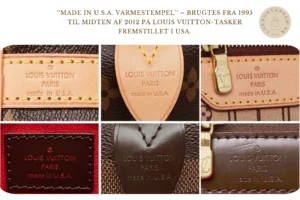
When authenticating, the factory code on the date code must always match the country on the heat stamp.

“Made in U.S.A. of imported materials” label

After 2012, Louis Vuitton replaced the heat stamp with a separate fabric or leather label that says “Made in U.S.A. of imported materials.”
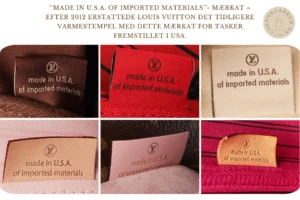
Some smaller leather goods made after 2012 no longer have a physical stamp, but only a date code (e.g. SD####) indicating the origin.

This is how it looks in practice – three models

To see how these details work in practice, we show three popular models made in the USA – the Neverfull, Speedy NM and Pochette Métis.

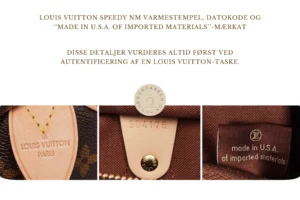
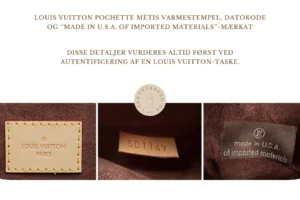
This combines the three key elements that are always assessed first during authentication: heat stamp, date code, and the label “Made in U.S.A. of imported materials.”

Louis Vuitton Neverfull heat stamp, date code and label:
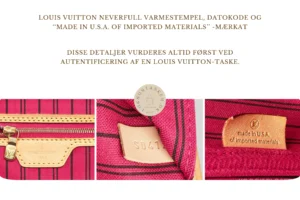
Louis Vuitton Speedy NM heat stamp, date code and label:
Louis Vuitton Pochette Métis heat stamp, date code and label:
Is there a difference in craftsmanship between countries?

No – there is no difference in quality between Louis Vuitton made in France, the USA, Italy or Spain.

All craftsmen are trained by masters to the same standards, and the materials and quality control are identical.

Some collectors prefer “Made in France” for the sake of the brand’s heritage – but the quality is the same in all workshops.

Endorsement

No matter where in the world your Louis Vuitton is made, it carries the same craftsmanship heritage and attention to detail –

and that is precisely what makes the brand timeless: an icon of quality, history and enduring beauty.

8. Conclusion – What does “Made in” mean today?

From the historic atelier in Asnières to the modern workshops in Europe and the USA, Louis Vuitton’s journey testifies to a rare balance between heritage, innovation and global presence.

For the consumer, insight into origin, markings and craftsmanship provides a deeper understanding of the quiet luxury that continues to characterize Louis Vuitton – a luxury that is built on time, skill and authenticity.

At luksustasker.dk, we evaluate each Louis Vuitton bag based on more than 30 verifiable parameters – including leather type, stitching, hardware, logo, structure and markings.

Our experience covers both vintage models and newer limited editions, and our goal is to create full transparency and security for you as a buyer – both online and in the showroom in Aalborg.

How to recognize a genuine Louis Vuitton bag – materials, logo, stitching and data codes.

All about Louis Vuitton date codes – and why they are not always proof of authenticity
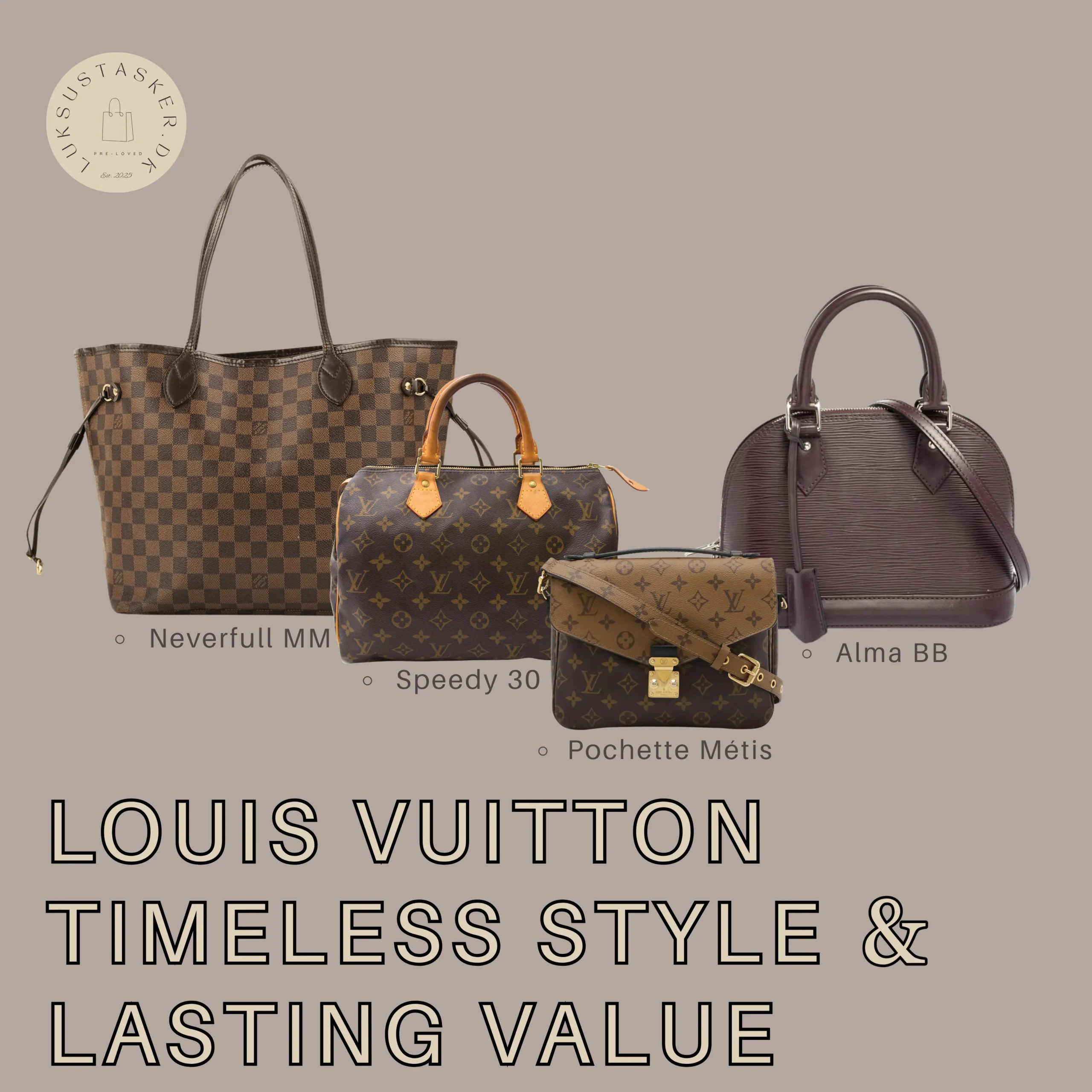
How to care for your Louis Vuitton bag – canvas, Vachetta leather and lining

Louis Vuitton’s coated canvas has been the house’s signature since the late 1800s. Developed to withstand water, travel and the test of time, the material has a reputation for being almost indestructible.

But the truth is more nuanced. Canvas is not “just plastic”: it consists of a dense cotton base with a resin coating that gives it its well-known shine and durability. This very surface is strong but sensitive to grease, dirt, sunscreen and pollution. Over time, it can become dull, sticky or even crack if not properly cared for.

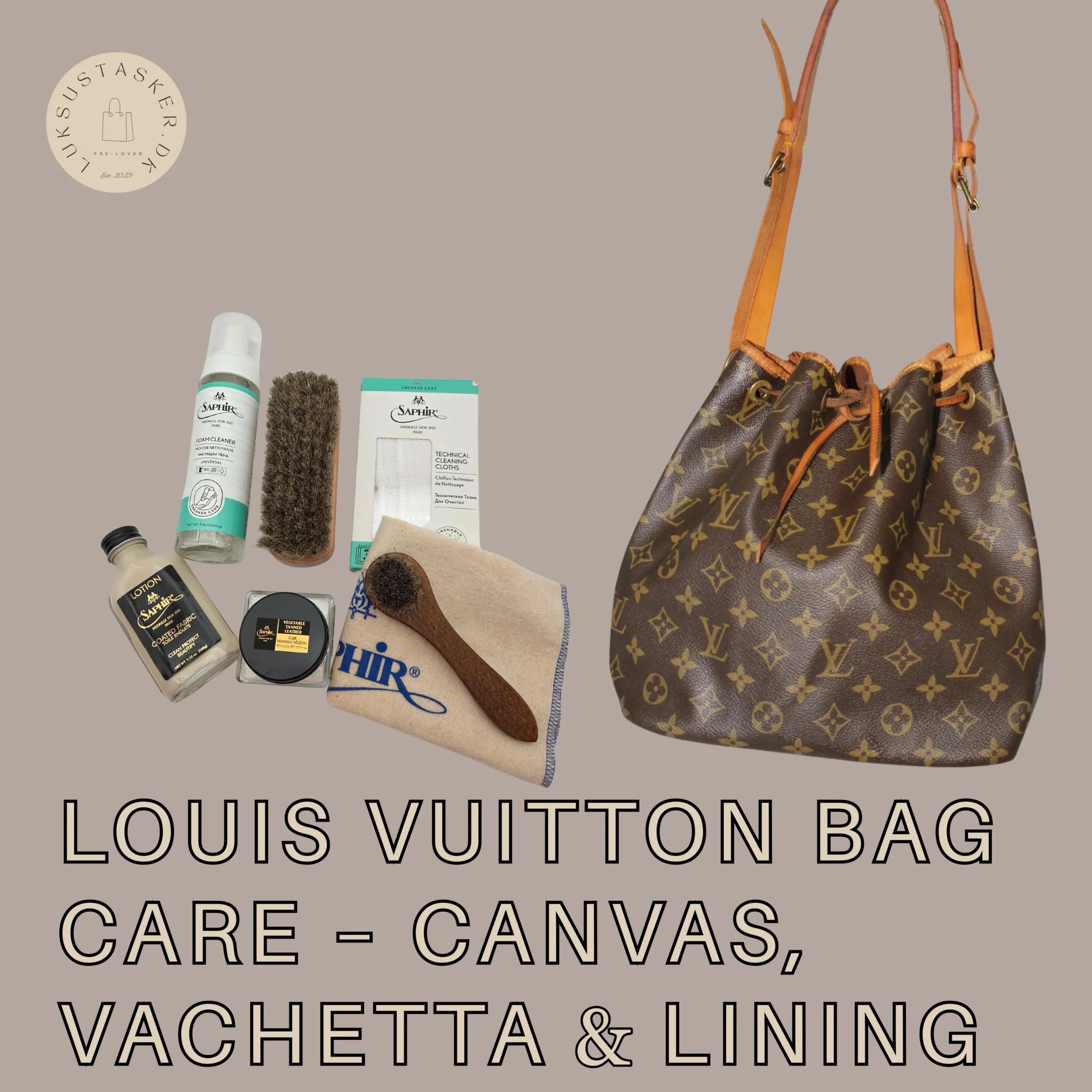
That’s why proper maintenance is essential: cleaning removes invisible dirt and oils, while conditioning with a dedicated canvas lotion prevents microcracks and keeps the surface supple. At luksustasker.dk we recommend professional products from Saphir, which are developed specifically for luxury materials.

In this guide we will review:

  1. Step 1: Cleaning canvas (Monogram & Damier)
  2. Step 2: Condition & Protect – canvas protection
  3. Step 3: Vachetta leather care
  4. Step 4: Patina – part of the bag’s journey
  5. Step 5: Inner lining care
  6. Step 6: Proper storage
  7. FAQ: Frequently asked questions
  8. Conclusion


💡 Do you have a Mulberry bag? Then also read our dedicated guide:

Care of Mulberry bags – how to keep the leather beautiful for many years

Step 1: Cleaning canvas (Monogram & Damier)

Louis Vuitton’s Monogram and Damier canvas are very durable, but they still require gentle cleaning.

How to:

  • Shake Saphir Foam Cleaner well.
  • Apply to canvas with a Saphir Chiffon cloth (cotton cloth) or a soft brush in circular motions.
  • Immediately wipe off the foam with a damp (not wet) cloth.
  • Let the bag dry for 2–3 hours.
  • Repeat the process on heavily soiled areas.

💡Expert tip: No matter what care product you choose for your bag, you should always test it on a small, inconspicuous area first to ensure that the leather reacts properly.


💡 Expert advice: Canvas is water-repellent, but stitching and Vachetta leather details are not – always avoid heavy rain.

Step 2: Condition & Protect – protecting the canvas

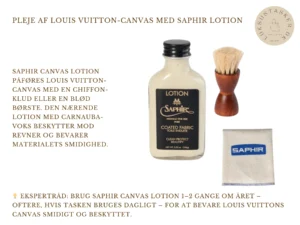
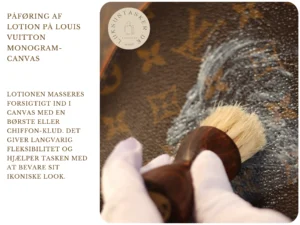
Once the canvas is completely dry, you should add protection. A lotion with carnauba wax prevents cracking and maintains flexibility.

How to do it:

  • Apply Saphir Canvas Lotion evenly over the surface.
  • Let it soak in.
  • Polish with a soft chiffon cloth for a smooth finish.

💡 Expert advice: With regular use, Louis Vuitton’s coated canvas is supple and retains its iconic look for decades.

Step 3: Caring for Vachetta Leather

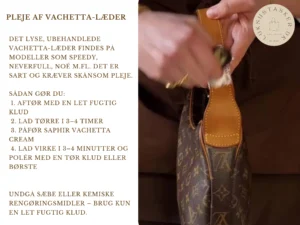
The light, untreated Vachetta leather found on many LV models like the Speedy and Neverfull is delicate and requires special care.

Light cleaning:

  • Wipe with a slightly damp cloth.
  • Let dry for 3–4 hours.
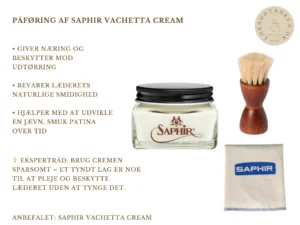
  • Apply Saphir Vachetta Cream for nourishment and protection.
  • Leave for 3–4 minutes and polish with a dry cloth or brush.

Deeper cleaning (for heavy use):

  • Apply Saphir Foam Cleaner to a brush or cloth.
  • Distribute evenly and wipe immediately.
  • Let dry for 3–4 hours.
  • Finish with Saphir Vachetta Cream for hydration and preservation.

💡 Expert Tip: Always test the product on a small, inconspicuous area first.

Step 4: Patina – part of the bag’s journey

Patina is the natural darkening of Vachetta leather and a hallmark of Louis Vuitton bags.

💡 Patina is a sign of authenticity, history and elegance – and should be appreciated, not removed.

💡 Expert advice: At luksustasker.dk we only recommend Saphir products for Louis Vuitton bags. They are developed specifically for luxury materials – and are much gentler than cheap universal products.

Step 5: Care of the inner lining

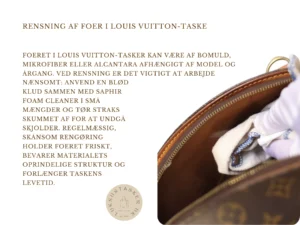
The lining varies (cotton, microfiber, Alcantara) depending on the model and year.

How to do it:

  • Empty the bag regularly and remove dust with a vacuum cleaner with a brush attachment.
  • Use small cases for makeup and pens.
  • Avoid liquids in the bag.
  • After cleaning: never let the foam from Saphir Foam Cleaner dry on the lining – wipe it off immediately.

Step 6: Proper storage

  • Fill the bag with tissue paper or acid-free paper to maintain its shape.
  • Store in a breathable dust bag (never plastic).
  • Stand the bag upright and avoid pressure from other objects.
  • Air it regularly.

💡 Expert advice: Avoid basements and attics – moisture and heat are the biggest enemies of luxury bags.

FAQ: Frequently Asked Questions

  • Can you use baby wipes on Louis Vuitton bags?

No, they contain chemicals that can damage both canvas and Vachetta. Use Saphir Foam Cleaner instead.


  • How do I avoid dark spots on Vachetta leather?

Wash hands before use, avoid rain and oily surfaces. Protect the leather with Saphir Vachetta Cream.


  • How often should I care for canvas with lotion?

2–3 times a year is typically enough – more often if the bag is used daily.

Conclusion

A Louis Vuitton bag is not just a fashion icon – it is an investment in quality, craftsmanship and timeless style.

With the right maintenance – step by step from canvas to Vachetta and lining – your bag can last 10–20 years or more, retain its appearance and even increase in value.

At luksustasker.dk you will find a careful selection of pre-loved and vintage Louis Vuitton and Mulberry bags in excellent condition – and we always recommend Saphir products for Louis Vuitton bags when you want to take the best possible care of your luxury bag.

About this guide

The information in this guide is intended for guidance only and is based on publicly available information, industry sources, collector archives, authentication databases, applicable Industry Authentication Standards, and many years of experience with authentic Louis Vuitton bags.


Vintage Louis Vuitton: why older models are becoming more sought after

Are you looking for a vintage Louis Vuitton bag with soul, style and investment potential?

In this guide, we explain why older models are back in focus – and how to find a pre-loved bag with both character and documented authenticity.

In a time when sustainability, quality and personal style are more important than ever before, many fashion lovers are turning their attention to vintage Louis Vuitton. At luksustasker.dk we are experiencing a significantly increasing interest – and we understand why.

1. Exceptional craftsmanship

Vintage Louis Vuitton bags are often made in a period when craftsmanship was more detailed and where materials were selected with great care.

This means:

  • A thicker, more durable canvas
  • Untreated Vachetta leather with a natural patina
  • Strong brass fittings that last for decades

💡 Expert tip:Speedy bags from the 1990s often have deeper monogram prints and a beautiful golden patina – perfect for collectors who appreciate an authentic vintage look.

2. Design with soul and history

Vintage bags are distinguished from modern collections by unique proportions, characterful details and typography that is no longer used.

Special characteristics:

  • Discontinued models and colors
  • Early versions of classics with different shapes or hardware
  • Classic leather types such as Taiga or Epi with older logo stamps

💡 Expert tip: For many, vintage is about more than just fashion – it’s about authenticity and nostalgia.

3. Sustainable luxury

By choosing vintage you make both a stylish and environmentally conscious investment.

You achieve:

  • Extended lifespan for existing products
  • Less environmental impact than new production
  • Ethical consumption without compromising aesthetics

💡 Expert tip: At luksustasker.dk we select vintage bags in top condition that deserve a new life from their next owner.

4. An investment with value

Many vintage Louis Vuitton bags not only hold their style – they also hold their value and can in some cases increase.

Popular investments include:

• Keepall 50 and 55 from the 1980s

• Speedy 30 with old French date codes

• Noé and Papillon with early hardware and lining

• A vintage Alma in Epi leather from the 1990s

• Reporter, Saumur and Cartouchière – classics with function and form

💡 Expert tip: Especially rare models or bags with older code formats from the 80s and 90s are experiencing increasing demand.

Timeline: Vintage LV from 1980–2000

1980s

• Speedy in Monogram and in the newly introduced Epi leather (1985)

• Noé as a bucket bag classic in both Monogram and Epi

• Papillon with early hardware and lining

• Keepall with white textile lining (mainly until the late 80s)

• Cartouchière and Saumur with brown leather trim


1990s

• Alma in Epi and later in Vernis (launched in 1998)

• Pochette Accessories (introduced in 1992) and Papillon in Monogram

• Monogram Canvas with early SD and TH date codes

• New leather lines such as Taiga (1993) and Nomade (mid-90s)


2000–ca. 2006

• Multicolore (Murakami x LV, launched 2003)

• Cherry Blossom (2003) and Cerises (2005)

• Mini Monogram line (2000)

• Perforated Monogram (2006 – end of early 2000s period)

5. Authenticity and security are essential

The vintage market is full of well-made replicas. That’s why it’s crucial to buy from a specialist dealer with experience and equipment.

At luksustasker.dk you get:

  • Professional assessment based on 30+ criteria
  • Review with UV light, magnifying glass and scent analysis
  • Check of stitching, logos, patina and hardware
  • Validation of date codes and scanning for RFID, where relevant
  • Comparison with archival material and expert databases

Also read our blog post about:

How to recognize a genuine Louis Vuitton bag – materials, logo, stitching and data codes.

All about Louis Vuitton date codes – understand formats, location and meaning

Visual checklist: What to look for in a vintage Louis Vuitton bag?

When evaluating a pre-loved or vintage LV model, check the following details:

  • Monogram – Is the pattern centered, symmetrical and without interruptions at the seams?
  • Leather – Does it have a natural patina? Is it untreated Vachetta leather (light beige, which turns golden over time)?
  • Zippers – Are they older brands like ECLAIR, TALON, YKK or ÉCLAIR (typical on bags from the 70s and 80s)?
  • Date code – Does the format and placement match the model and age of the bag?
  • Lining – Is the material and color correct for the specific model and period? (e.g. brown cotton in a Speedy from the 1990s)
  • Logo and embossing – Is the embossing sharp and clear? Does it say “® Louis Vuitton Paris made in France” (or other country)?
  • Hardware – Is the metal heavy, matte gold or brass? Does it have the correct engraving and patina?
  • Stitching – Are the stitches straight, tight and uniform? For example, are the stitches counted correctly around the handle (often 5)?
  • Typography – Does the font match LV’s historical font (e.g. on the logo, date code, label)?
  • Scent – ​​Does the bag have an authentic leather scent – ​​not chemical or musty?

💡 Expert advice: Always compare with verified vintage examples – both online and in documented collector databases. At luksustasker.dk, we do just that in our assessment process.

When style, quality and history go hand in hand

Vintage Louis Vuitton is more than just fashion. It is conscious consumption, a passion for good craftsmanship and a love of iconic design. Each bag tells its own story – and we help you find the one that suits yours.

About this guide

The information in this guide is intended as a guide only and is based on publicly available information, industry sources, collector archives, authentication databases, applicable Industry Authentication Standards and many years of experience with authentic Louis Vuitton bags.


Ready to find your vintage classic?

At luksustasker.dk you will find a handpicked selection of pre-loved and vintage Louis Vuitton bags – all verified, authenticated and guaranteed for authenticity.

  • Rare vintage gems and discontinued models
  • Professional advice and safe shopping
  • Fast delivery and 14-day return policy

Contact us today – we are happy to share our expertise and help you on your way.

See the full selection here: luksustasker.dk/shop

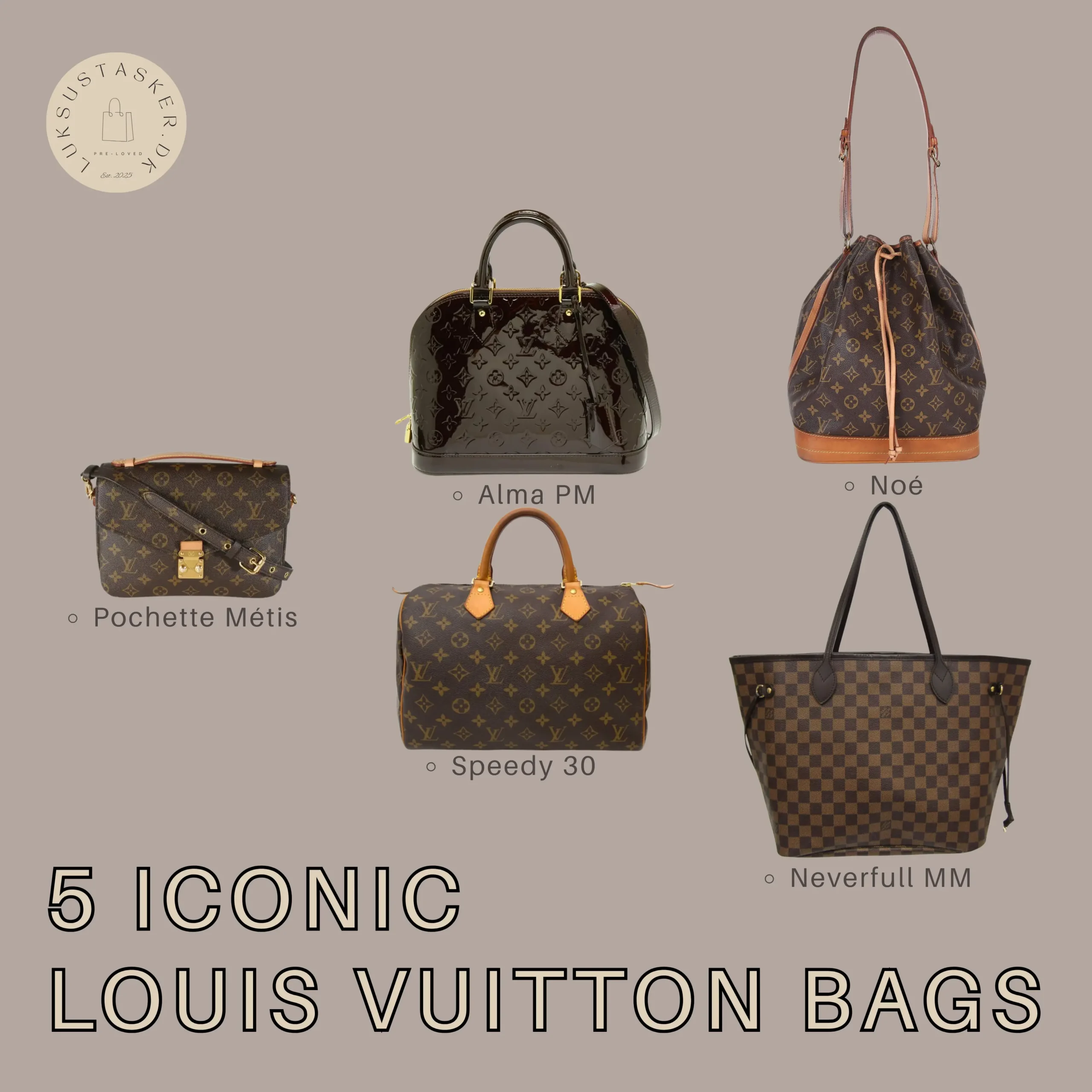
5 iconic Louis Vuitton bags that never go out of style

Are you looking for the most iconic Louis Vuitton bags that both hold their style and value? In this guide, we present five of the most sought-after models that combine luxury, functionality and timeless design – perfect for those of you who shop pre-loved with a focus on documented authenticity.

At luksustasker.dk, we help you choose the right classic for your style – based on over 30 authentication criteria and many years of experience with vintage Louis Vuitton.

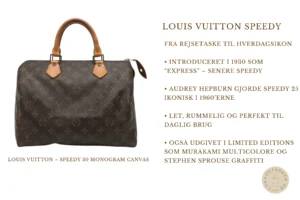
1. Speedy – from travel bag to everyday classic

The most iconic bag in Louis Vuitton history – loved since the 1930s

Originally launched in 1930 as the “Express”, the model quickly became known as the Speedy – an elegant and lightweight everyday bag that became extra popular when Audrey Hepburn asked for a smaller version (Speedy 25) in the 1960s.

Why it lasts:

  • Light and roomy
  • Available in both Monogram, Damier Ebene and Damier Azur
  • Elegant yet practical – perfect for everyday use
  • Also released in limited editions (Murakami Multicolore, Stephen Sprouse Graffiti)

💡 Expert tip: Look for Speedy models from the 1990s – they often have thicker canvas and a beautiful patina, which makes them particularly valuable on the second-hand market.

Read also: All about Louis Vuitton date codes – understand formats, location and meaning

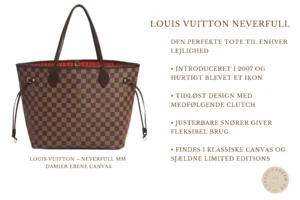
2. Neverfull – the perfect tote for every occasion

A modern classic with room for everything

Introduced in 2007 and already an icon. The Neverfull is known for its spaciousness, durability and simple, stylish look. A popular choice for work bags, travel and everyday use.

Why it lasts:

  • Timeless and flexible design
  • Included clutch and adjustable laces
  • Ideal for both a diaper bag, work bag and weekend trip
  • Available in classic canvas and rare limited editions

💡Expert tip: Many pre-loved Neverfull bags are sold without the original clutch – be aware if it comes with it, as it increases the value.

See also: How to recognize a genuine Louis Vuitton bag – materials, logo, stitching and data codes.

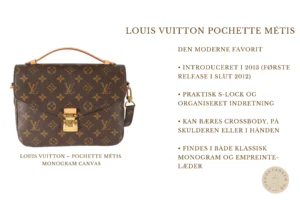
3. Pochette Métis – the modern favorite

The perfect crossbody for everyday life and the weekend

Since its launch in 2013, the Pochette Métis has become one of the most sought-after models. Known for its S-lock, organized interior and versatile carrying strap – and often sold out at Louis Vuitton.

Why it lasts:

  • Multiple interior compartments and good structure
  • Can be worn crossbody, on the shoulder or in the hand
  • Available in classic Monogram and Empreinte leather
  • One of the most popular choices among younger LV collectors

💡 Expert tip: Always check the S-lock – it may be tight at first, but on genuine models it has a very special click sound and feels solid.

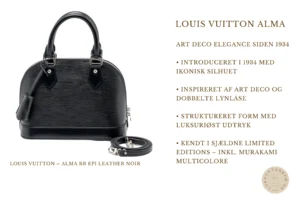
4. Alma – Art Deco in French

An elegant handbag with character and history

Designed in 1934, Alma was the second bag made in structured leather after the iconic Steamer Bag from 1901. The Art Deco-inspired silhouette and double zipper make it both classic and practical.

Why it lasts:

  • Sharp, structured shape gives a luxurious expression
  • Available in Monogram, Epi, Vernis and others.
  • A model that is suitable for both business and dinner
  • Known in rare limited editions incl. Murakami Multicolore

💡 Expert tip:Vintage Alma in Epi leather is often cheaper than Monogram, but keeps its shape better and looks new for longer.

Read more about the production: Made in France… or? Where are Louis Vuitton bags produced today?

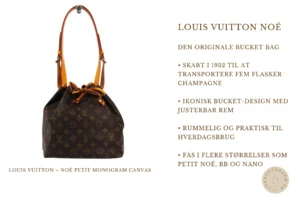
5. Noé – the original bucket bag

Designed for champagne – loved for its look

Created in 1932 to carry five bottles of champagne, the Noé quickly became a fashion favorite, especially in the 1950s and later in the 1990s. The bag combines casual elegance with practical volume.

Why it lasts:

  • Unique history and iconic bucket design
  • Adjustable strap and spacious interior
  • Available in sizes like Petit Noé, BB and Nano
  • Still a sought-after vintage model

💡Expert tip: If you’re buying a vintage Noé, check the stitching around the lace closure – genuine bags have strong and straight stitching, even after years of use.

Read more: Vintage Louis Vuitton: why older models are becoming more sought after

How do you choose the right model?

Think about your needs and style:

  • For everyday use: Speedy or Neverfull
  • For events and dinners: Alma or Pochette Métis
  • For weekends and travel: Noé or a vintage Keepall

💡Remember: Pre-loved bags often have details and leather quality that you won’t find in new collections – and can be a better investment in the long run.

About this guide

The information in this guide is intended as a guide only and is based on publicly available information, industry sources, collector archives, authentication databases, applicable Industry Authentication Standards, and many years of experience with authentic Louis Vuitton bags.


Conclusion: Ready to find your next Louis Vuitton or Mulberry bag?

These five Louis Vuitton classics combine functionality, history, and style – and hold their value, both aesthetically and financially.

At luxurybags.com you will find a carefully selected assortment of genuine pre-loved bags from both Louis Vuitton and Mulberry – all 100% verified, professionally appraised, and guaranteed to be authentic.

  • The selection ranges from rare vintage gems to newer models from iconic fashion houses
  • Fast and insured delivery and 14-day return policy
  • Personal advice – we are happy to help you find the right bag for your style and needs

Do you have questions or are you looking for a specific model?

Contact us for personal advice – or book a visit to our showroom in Aalborg.

Explore the entire selection here: luksustasker.dk/shop

All about Louis Vuitton date codes – understanding formats, locations and meanings

Want to learn how to read a Louis Vuitton date code correctly – and what information it can provide about the bag’s origin, age and value?

Date codes are an important tool in authentication, but they can never stand alone as proof of authenticity. They should always be assessed in conjunction with other characteristics of the bag: the “Made in …” stamp, logo, materials, stitching, hardware and lining. This principle is similar to what we have discussed in the article How to recognize a genuine Louis Vuitton bag – materials, logo, stitching and date codes.

This guide is for informational purposes only and is based on publicly available information, industry sources, collector archives, authentication databases, applicable Industry Authentication Standards and many years of experience with authentic Louis Vuitton bags.

In this guide, we will cover:

  1. What is a date code?
  2. Historical development: 1980s to present
  3. Typical locations – where can I find the date code?
  4. Techniques – how is the date code applied?
  5. Datacodes – Overview of Factory Codes
  6. List of Louis Vuitton factory letters – with examples of the most common codes for each country of production
  7. Special and rare examples
  8. Typical errors on counterfeit codes
  9. Conclusion: Use the code with care


1. What is a date code?

A date code is a combination of letters and numbers, embossed or stamped on the leather or lining of a Louis Vuitton bag or accessory.

These stamps indicate the date of production and the country of production, and are used by collectors and buyers to verify the authenticity of a product.

In this guide, we explain what date codes mean, how to read them, and why they play an important role in assessing the authenticity of pre-loved and vintage bags.

The history of Louis Vuitton date codes

Although the French fashion house Louis Vuitton was founded as early as 1854, the first date codes were not introduced until 128 years later.

For many years, this was probably unnecessary, as the brand had patented production methods for both locks, canvas, and leather, making imitations almost impossible.

However, from the early 1980s, Louis Vuitton decided to add date codes to all bags and accessories.

The codes have since changed format, location and meaning several times – in line with the brand’s growing production and the need for more detailed information.

Date codes were used until March 2021, when Louis Vuitton switched to embedded microchips as a more secure and modern form of identification.

How to read a date code

• The letters indicate the country where the item was produced.

• The numbers indicate the week, month or year of production (depending on the period and format).

It is important to know that the date code is not a unique serial number, but a supporting element in the overall assessment of authenticity.

💡 Expert tip: Many replicas use realistic or directly copied date codes. Therefore, the code should always be assessed in conjunction with other authenticity details – such as materials, stitching, hardware, logo and Made in marking.

Date Codes and Authenticity – What to Remember

Date codes are just one part of a bigger authenticity picture.

A genuine Louis Vuitton bag is characterized by the quality of the materials, the precision of the stitching, the weight of the hardware and the overall finish.

At luksustasker.dk, we always evaluate the date code along with more than 30 different parameters before approving a bag as genuine.

Also read: How to recognize a genuine Louis Vuitton bag – materials, logo, stitching and date codes.

2. Historical development – ​​from the 1980s to today

Before 1982

No standardized date codes. Bags were identified via stamps and labels.

1982 – mid-1980s:

• First: 3–4 digits (YYM / YYMM).

– Example: 823 = March 1982;

– Example:8312 = December 1983.


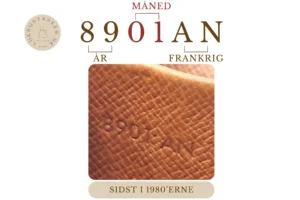
Mid/late 1980s: 3–4 digits followed by 2 letters (numbers → letters).

– Example: 8901AN = January 1989 (France);

– Example: 874VX = April 1987 (France).

Note: Some sources mention that letters began to appear before the digits in the late 1980s (e.g. VI8610). To avoid confusion, we follow the convention here (numbers → letters) and explain that there was a transitional period with both variants.


1990 – 2006

• Format: 2 letters + 4 digits.

• 1st & 3rd number = month, 2nd & 4th number = year.

– Example: FL0022 = February 2002 (France).

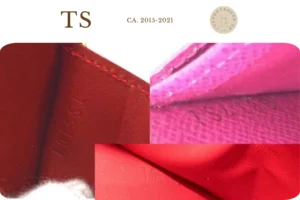
– Example: CA0012 =January 2002 (Spain).


2007 – February 28, 2021

• Format still: 2 letters + 4 digits.

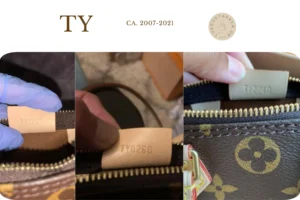
• 1st & 3rd number = week, 2nd & 4th number = year.


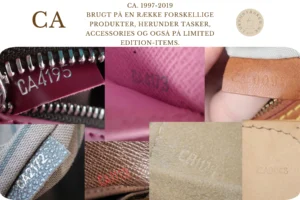
– Example: CA1088 = week 18 in 2008 (Spain).

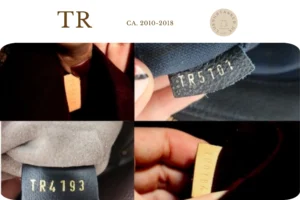
– Example: TR3117 = week 31 in 2017 (France).

💡Expert tip: The transition took place in late 2006 / early 2007 – therefore bags with both systems are available in this period.


From March 1, 2021

• Louis Vuitton has phased out visible date codes in favor of an NFC/RFID chip that stores information digitally.

• The transition officially took place on March 1, 2021. However, some models produced at the beginning of the year may still have both a code and a chip.

• Chip data is not always available to consumers – it is primarily used by Louis Vuitton itself and by professional authentication partners.

3. Typical locations – where can I find the date code?

Typical locations – where can I find the date code?

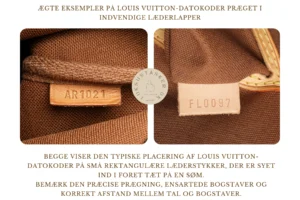
Generally, a date code in a Louis Vuitton bag is located inside the bag – typically close to the seams and often in connection with a pocket.

To find the date code on your bag, first examine the interior pockets. In most cases, you will find the code either embossed on a small leather patch inside the pocket or stamped directly into the lining. Look carefully, especially if the bag has an Alcantara lining, as the code may be faded and almost invisible.

Below you can see where the date code is most often located on some of the most popular Louis Vuitton models:

Louis Vuitton Speedy

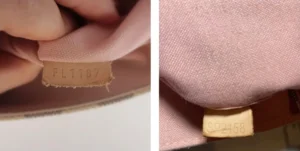
On a Speedy – regardless of size – you will find the date code under the inside pocket. The code is embossed on one of the two small leather patches by the pocket.

Louis Vuitton Neverfull

On the classic Neverfull, the date code is located under the large fabric pocket on the right side (when looking directly at the pocket).

Note that an Epi leather Neverfull may have the date code in a different location – namely on the inside of one of the handles, exactly where the handle meets the upper leather edge.

Louis Vuitton Pochette Métis

On a Pochette Métis, you will find the date code in the outside zipper pocket on the back of the bag. Open the pocket and you will be able to see the code if the bag was produced between 2014 and 2021.

Louis Vuitton Toiletry Pouch 26

The date code is located inside near the top, embossed directly into the leather lining along one of the side seams.

Louis Vuitton Artsy

The code is located on the lining inside one of the interior pockets – this model usually does not have a leather patch.

Louis Vuitton Palm Springs Mini Backpack

The date code is typically found inside on the right side, embossed on a small leather patch that sits by the interior pocket.

💡 Expert tip:

If you can’t find the date code, it doesn’t necessarily mean that the bag is fake. Starting in 2021, Louis Vuitton began gradually phasing out the classic date codes and replacing them with microchips that can only be scanned by authorized retailers.

4. Techniques – How are date codes applied?

Louis Vuitton Date Code Location

The location of Louis Vuitton date codes varies depending on the model and year of production.

Knowing where to look for these stamps makes authenticating and dating bags more accurate and efficient.

Interior Leather Patches:

The date code is most often found on a rectangular leather patch sewn into the lining along a seam.

This is the most common location of date codes on Louis Vuitton bags.

Direct embossing:

On some models, the date code is embossed directly into the lining or in a discreet place in the bag, e.g. close to the top edge of an inside pocket.

Inside pockets:

Date codes are often found along the top edge of inside pockets or on a riveted leather patch under a loose inside pocket.

On some models, such as the Speedy, the date code is embossed on a leather patch sewn into the inside seam.

5. Datacodes – Overview of Factory Codes

Overlapping Louis Vuitton Factory Codes – Full Explanation

SD – France / USA

• Older models (before the mid-1990s): mostly France.

• Newer models (from the mid-1990s onwards): most often USA (San Dimas, California).

• History: Started as a French code, but was adopted for American production during the 1990s.

• Typical use: Very common on canvas bags from the USA in the 1990s and 2000s.

• Check: Compare the date code with the “Made in …” stamp and other signs of authenticity (materials, stitching, hardware).
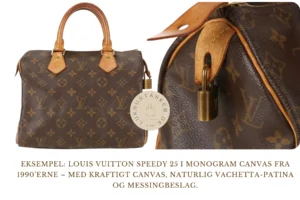
FL – France / USA

• Most common: France.

• History: Original French code; also documented on bags from the USA, especially in the 1990s.

• Typical use: American series in the 1990s.

• Check: Compare the date code with the “Made in …” stamp and other signs of authenticity (materials, stitching, hardware).
SA – France / Italy

• Most common: France.

• History: Known as a French code in the 1990s on classic bags. Later also seen in Italy, especially on smaller leather goods.

• Typical use: Classic bags (France), wallets/belts (Italy).

• Check: Compare the date code with the “Made in …” stamp and other signs of authenticity (materials, stitching, hardware).
LA – France / USA

• Most common: USA (San Dimas, California).

• History: Appeared in France in the 1980s and early 1990s. From the late 1990s it is mainly seen in the USA.

• Typical use: Bags from the 1990s and early 2000s.

• Check: Compare the date code with the “Made in …” stamp and other signs of authenticity (materials, stitching, hardware).
LW – Spain / France

• Most common: Spain (Toledo).

• History: Used in Spain since the 1990s; a few cases documented in France, but without a fixed period.

• Typical use: Speedy and accessories produced in parallel in Spain and France.

• Check: Compare the date code with the “Made in …” stamp and other signs of authenticity (materials, stitching, hardware).
BC – Italy / Spain

• Most common: Italy.

• History: Used in Italy since the 1980s. Also used in Spain in the 2000s in connection with production restructuring.

• Typical use: Often on SLG (wallets, cardholders).

• Check: Compare the date code with the “Made in …” stamp and other signs of authenticity (materials, stitching, hardware).
💡Expert tip: General check (applies to all codes above)

The letters in the date code should always match the “Made in …” stamp on the bag. If they do not match, it is a clear red flag.

💡Note

Louis Vuitton has never published an official list of factory codes.

The information presented here is based on well-documented observations and many years of experience with authentic bags. Variations may occur, and factory codes alone do not prove authenticity.

They should therefore always be assessed together with other authenticity criteria such as materials, stitching, hardware, lining and the “Made in …” stamp.
The dates for SA, LA, LW and BC are indicative, as there are no official dates for any changes between countries. The information is based on well-documented observations and many years of experience.


Do you want to know where and how Louis Vuitton bags are created – and what characterizes genuine craftsmanship?

Read our article with authentic examples of heat stamps, date codes and ‘‘Made in U.S.A. of imported materials’’ labels – including on models such as the Neverfull, Speedy and Pochette Métis.

Read the full guide

Made in France… or? Where are Louis Vuitton bags made today? and learn about Louis Vuitton’s production, authenticity and craftsmanship.
 

6. List of Louis Vuitton factory letters – with examples of the most common codes for each country of production

Many people mistakenly believe that a genuine date code automatically means that the bag is genuine. Unfortunately, this is not the case.

To assess authenticity, several factors must be taken into account – not only the date code itself, but also the font, the color of the embossing, its location and the overall impression of the bag.

Proper authentication requires that the date code be assessed in conjunction with other characteristics:

• The “Made in…” stamp

• The Louis Vuitton logo and its precision

• Materials and leather type

• Stitching and craftsmanship

• Hardware and zippers

• Interior lining and labels

Below are some of the most common fonts used for date codes. Please note that the list is not exhaustive and is constantly updated – although Louis Vuitton no longer uses date codes on newer models.

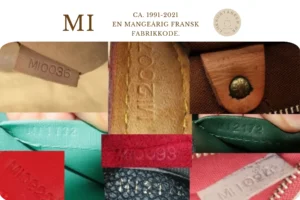
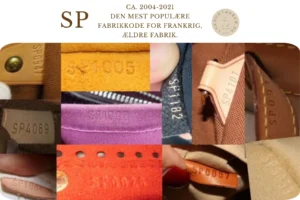
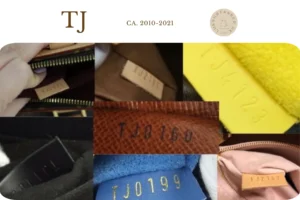
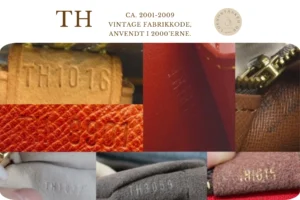
List of Louis Vuitton Date Codes (Made in France)

France is the home country of Louis Vuitton and the main production site for the brand’s leather goods. The majority of Louis Vuitton’s classic and exclusive bags are made here – from the iconic models produced in the Atelier Asnières near Paris to modern workshops spread across the country.

French models are marked “Made in France” and are characterized by precision, quality craftsmanship and a long tradition of savoir-faire. The date codes from the French workshops follow the same structure as in the other countries, but are recognized by specific factory letters that show that the bag was made in France.


List of Louis Vuitton date codes (Made in Spain)

Louis Vuitton has been producing bags and small leather goods in Spain for many years – especially in the areas around Barcelona and Girona, where there is a long tradition of craftsmanship and leather production. The Spanish workshops are an important part of Louis Vuitton’s European production and are responsible for a large part of the brand’s popular models.

The date codes from the Spanish ateliers follow the same structure as in other European countries, but are distinguished by special factory letters that identify that the bag was made in Spain.

Below you will find an overview of the most well-known Spanish factory abbreviations that appear on genuine Louis Vuitton bags marked Made in Spain.

List of Louis Vuitton date codes (Made in Italy)
For many years, Louis Vuitton has had selected bags and small leather goods produced in Italy – especially in Tuscany, which is known for its strong leather goods and craftsmanship. The Italian workshops produce both classic models and accessories in line with the French and Spanish ateliers. The date codes from Italian workshops follow the same structure as in other EU countries and are distinguished by special factory letters that indicate that the item was made in Italy. Below you will find an overview of the most well-known Italian factory abbreviations that can be seen on genuine Louis Vuitton bags marked Made in Italy.


List of Louis Vuitton Date Codes (Made in U.S.A.)

Louis Vuitton has been producing in the United States for more than three decades, where the brand operates several leather workshops in California and at Rochambeau Ranch in Texas (Johnson County). The American workshops produce bags and small leather goods for the North American market to exactly the same quality standards as the European workshops.

American models are marked “Made in U.S.A.” – either embossed directly into the leather or on a separate label with the text “Made in U.S.A. of imported materials”. This addition means that the materials (leather, lining and hardware) are imported from Europe, while the bag itself is assembled in the United States.

The date codes from the American workshops follow the same structure as in European countries, but are distinguished by specific factory letters, which indicate that the bag is made in the United States.


List of Louis Vuitton Date Codes (Made in Germany)

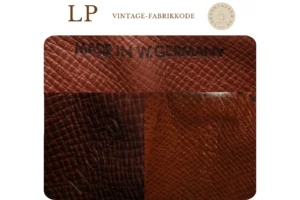
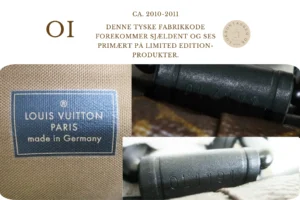
It is rare to see Made in Germany on Louis Vuitton bags. When it does appear, it is usually vintage or special editions. Officially, Louis Vuitton states that leather goods are made in France, Spain, Italy and the USA; therefore, German date codes are considered exceptions in an archival/vintage context. 

Examples of factory letters documented in the market: LP, OL.


7. Special and rare examples

• Saks Fifth Avenue & Neiman Marcus:

In the 1970s and 1980s, these American department stores sold exclusive Louis Vuitton models, made specifically for the American market.

The bags were often provided with foil stamps or small metal plates with the name of the department store.

They were produced in collaboration with The French Luggage Company and used original Louis Vuitton canvas under official license. Today they are considered rare collector’s items.

• The French Luggage Company (USA, c. 1976–1991):

Louis Vuitton established a licensing partnership during this period to meet the growing demand in the United States.

The bags were sold through luxury retailers such as Saks Fifth Avenue, Neiman Marcus and Myers, and are characterized by:

– Tyvek tags instead of leather tags,

– lack of date codes,

– different hardware and zippers.

Although these models differ from the European versions, they are 100% authentic and documented as part of Louis Vuitton’s official licensed production.

💡 Expert tip: Bags from The French Luggage Company are often mistaken for replicas because they do not have date codes. A correct assessment should therefore be based on materials, stitching and the precision of the logo, not just the marking.

8. Typical errors in counterfeit codes

Counterfeit date codes often reveal themselves by:

• wrong font or mismatched letters

• too deep or uneven embossing

• incorrect spacing between numbers and letters

• codes that do not match the Made in label

💡Expert tip: Use our photo guide as a reference for typical errors (font, depth, spacing, mismatch with Made in), and always evaluate the code in conjunction with other details.

9. Conclusion – use the date code wisely

A Louis Vuitton date code can provide valuable insight into a bag’s origin – but it should never stand alone.

At luksustasker.dk, we evaluate each bag based on more than 30 authentication parameters: materials, stitching, logo, hardware, age, accessories and much more.

Are you looking for a Louis Vuitton bag with documented origin and professional authenticity assessment?
Explore our current selection here: luksustasker.dk/shop

We know how important it is to feel safe when investing in luxury – especially in the pre-loved market.

Do you have questions or need personal guidance?

Contact us – we will be happy to help you make an informed and safe choice.


How to identify an authentic Louis Vuitton bag – materials, logo, stitching and date codes

Louis Vuitton is one of the world’s most copied luxury brands. Therefore, it is crucial to be able to distinguish an authentic bag from a replica. Many fakes look convincing at first glance – but small details reveal the truth.

Here’s our professional guide on how to spot the difference.

This guide will help you identify the key signs of authenticity – and avoid copies that may at first glance resemble the real thing.
This guide is for informational purposes only and is based on publicly available information, industry sources, collector archives, authentication databases, applicable Industry Authentication Standards and years of experience with authentic Louis Vuitton bags.

In this guide, we will review:

  1. Materials – Canvas and Leather
  2. Stitching and Craftsmanship
  3. Hardware and Logo
  4. Date Codes and Production Codes
  5. Datacodes – Overview Factory codes
  6. Inner lining and labels
  7. Smell and fragrance
  8. Packaging and dustbag
  9. Typical signs of copies
  10. FAQ and practical checklist
  11. Conclusion – overall assessment is crucial
  12. Expert advice at luksustasker.dk

1. Materials – canvas and leather

Louis Vuitton uses both canvas and different types of leather in their collections. Here we review the most well-known materials and their characteristics.

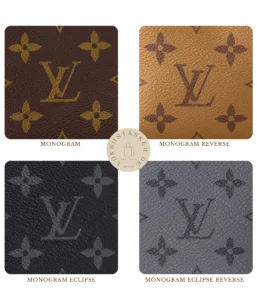
Monogram Canvas

Coated canvas (not leather) with the iconic LV print.

💡 Expert tip: Genuine Monogram canvas feels matte and firm – never plastic or shiny.


Damier Canvas

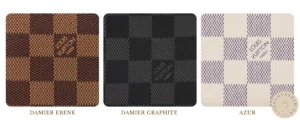
Checkered pattern in several versions: Ebene (brown), Azur (light, 2006) and Graphite (black/grey, 2008). There are also limited editions such as Damier Cobalt.

💡 Expert tip:On genuine Damier canvas, the colors are deep and the pattern is sharp, without blurring or uneven printing.


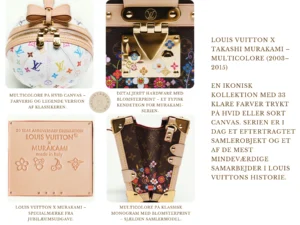
Monogram Multicolore (2003-2015)

A collaboration between Louis Vuitton and artist Takashi Murakami. 33 different colors printed on white or black canvas. The series is today sought after by collectors.

💡 Expert tip: Original Multicolore bags have bright colors and precise printing without smudging.


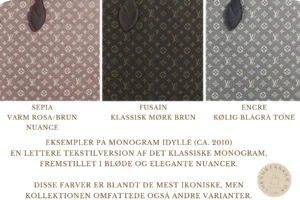
Monogram Idylle (ca. 2010)

A lighter textile version of Monogram, made in soft shades such as beige, pink and brown.

💡 Expert tip: The fabric feels firm, but not rough. Genuine models have precise stitching and clear logos.


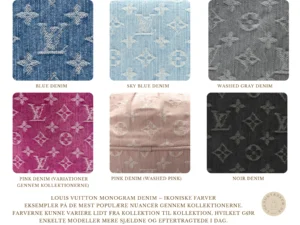
Monogram Denim (mid-2000s)

Monogram pattern printed on dyed denim in blue, green, pink, gray and black. Gives a bohemian and vintage look.

💡 Expert tip: Genuine Monogram Denim fades naturally with use – copies often appear too even in color.


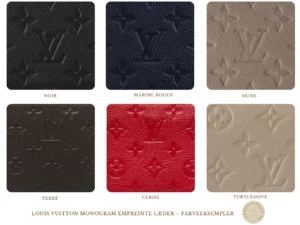
Empreinte leather

Soft calfskin with embossed monogram.

💡 Expert tip: Genuine Empreinte feels elastic and soft – the monogram stands out deep and precisely.


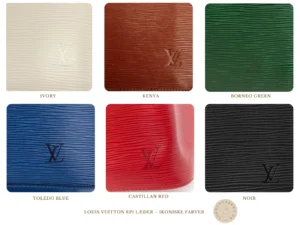
Epi leather (1985-)

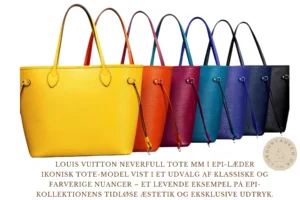
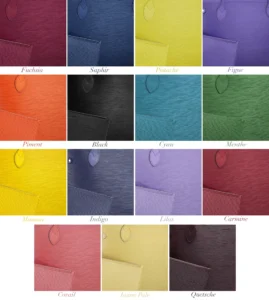
Structured and scratch-resistant leather, often in strong colors.


💡 Expert tip: Original Epi leather has a distinct wavy structure and a discreet embossed LV logo in the lower corner.


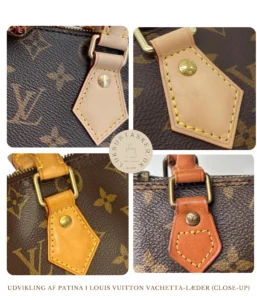
Vachetta leather

Natural, untreated leather that develops a patina over time.


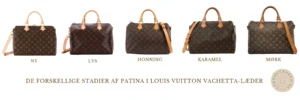
Vachetta leather – development of patina

New Vachetta

Very light, almost white/beige color, which stands in elegant contrast to the Monogram canvas.

Light patina

After a short period of use, the leather takes on a faint beige tone, sometimes with a slight pink tinge.

Honey patina

A warm golden hue that is highly prized by collectors. Marking a classic balance between new and used leather.

Caramel Patina

With further use, the leather develops a deeper amber or caramel color, giving the bag a rich and timeless look.

Dark Patina

With prolonged and frequent use, the leather will turn dark brown. Contact with hands, oil and lotion can intensify the process, especially on handles and zipper pulls.

💡 Expert tip: Genuine Vachetta leather always patinas over time – if the leather does not change, it is a warning sign.


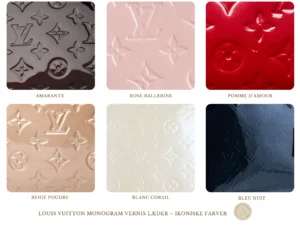
Vernis Leather

Patent leather with a glossy finish. Over time, it develops a slightly golden hue.

💡 Expert tip:Genuine Vernis has a mirror-like depth of color, but is sensitive to scratches and color transfer.


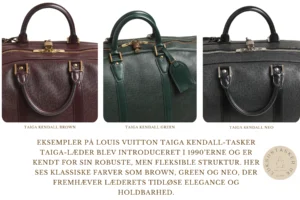
Taiga leather (1990s-)

Robust, structured leather used primarily in men’s collections.

💡 Expert tip: Genuine Taiga has a uniform, fine structure – robust, but still flexible.


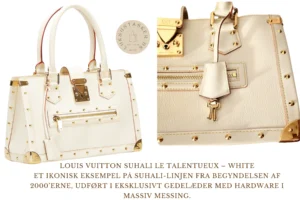
Suhali leather (early 2000s-)

Exclusive goat leather of the highest quality, produced in a few colors. Rare on the preloved market today.

💡 Expert tip: Suhali feels silky smooth with a matte finish – always with heavy stitching and solid brass hardware.


Taurillon leather

Soft, grained calfskin type, used in many newer models (e.g. Capucines).

💡 Expert tip: The surface is naturally grainy and uneven – copies are often too smooth.


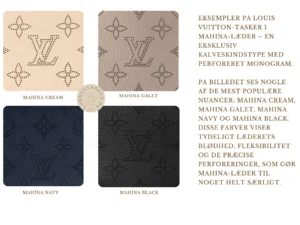
Mahina leather (2007-)

Exclusive calfskin with perforated Monogram, inspired by Polynesian culture.

💡 Expert thread: Genuine Mahina has precise perforations and extremely soft leather.

2. Stitching and craftsmanship

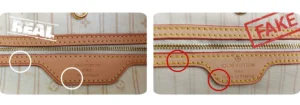
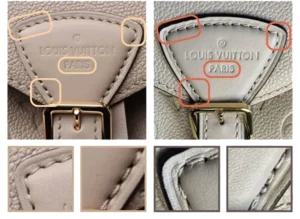
• The stitching is very precise and evenly placed.

• The number of stitches at the handles and edges is identical on both sides.

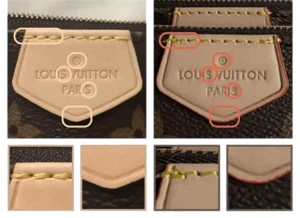
• Louis Vuitton is characterized by an even, lightly waxed, yellow/mustard yellow stitching; irregularities are a warning sign.

• Each stitch may be slightly slanted because many details are sewn by hand.

• Loose threads, unevenness or asymmetry often reveal copies.

💡 Ekspertråd: Forfalskninger bruger ofte for lyse, syntetiske tråde (orange/gul) og uden voks-agtig struktur.

3. Hardware and logo

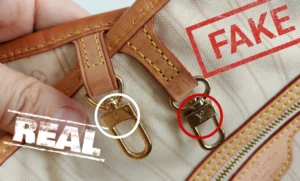
• Original hardware is metal and feels solid; on newer models, the finish is typically a gold-colored coating, while some parts may be brass.

• The surface has a warm golden tone, not a mirror-like finish.

• Engravings should be deep, sharp, and centrally located.

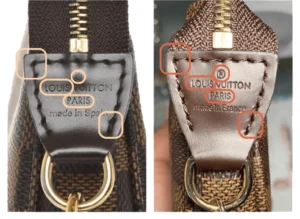
• Embossing/printing “Louis Vuitton Paris” should be sharp and even:

– The O appears round (not distinctly oval)

– The L has a short base

– The Ts are close together, but not touching

– The ® symbol is proportioned and correctly positioned in relation to the text

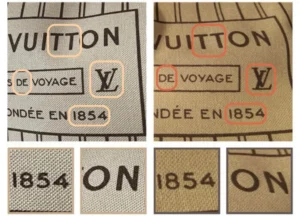
• The font is Louis Vuitton’s own; deviating letter shapes or spacing are a red flag.

Note (vintage): Patina is normal: darker padlocks, slightly faded zippers and possibly greenish oxidation on buttons.


4. Date codes and production codes

Historical development (overview):

• Before 1982: no date codes.

• 1982 – mid-1980s: 3–4 digits → year + month

– 821 = January 1982

– 8211 = November 1982

• Mid/late 1980s: 

3–4 digits + 2 letters (factory/country)

– 882VI = February 1988 (France)

– The code could be split: numbers in one place, letters in another

• 1990–2006: 2 letters + 4 digits

– 1st & 3rd digits = month; 2nd & 4th digits = year

– SA1004 = October 2004 (Italy)

• 2007 – March 2021: 2 letters + 4 digits

– 1st & 3rd digits = week; 2nd & 4th digit = year

– FL2131 = week 23, 2011 (USA)

As of 2021: LV has gradually moved away from visible codes in favor of NFC/RFID chips. Location and readability vary, and chip data is not always available to consumers.

Location (especially vintage):

• The code may be on a leather patch in an inner pocket or stamped close to a seam.

• On some vintage models, the code may be faintly visible, faded, or hidden deep in the bag – requiring careful inspection.

• Practical tip: search “[model name] + date code” for typical locations for your particular model.

Important: A correct date code does not prove authenticity in itself. Many copies use realistic/”borrowed” codes, and the codes are not unique.
5. Datacodes – Overview of Factory Codes

Overlapping Louis Vuitton factory codes – full explanation 

SD – France / USA

• Older models (before mid-1990s): most often France.

• Newer models (from mid-1990s onwards): most often USA (San Dimas, California).

• History: Started as a French code, but was adopted for American production during the 1990s.

• Typical use: Very common on canvas bags from the USA in the 1990s and 2000s.

• Check: Compare the date code with the “Made in …” stamp and other signs of authenticity (materials, stitching, hardware).

FL – France / USA

• Most common: France.

• History: Originally French code; also documented on bags from the USA, especially in the 1990s.

• Typical use: American series in the 1990s.

• Check: Compare the date code with the “Made in …” stamp and other signs of authenticity (materials, stitching, hardware).
SA – France / Italy

• Most common: France.

• History: Known as the French code in the 1990s on classic bags. Later also seen in Italy, especially on smaller leather goods.

• Typical use: Classic bags (France), wallets/belts (Italy).

• Check: Compare the date code with the “Made in …” stamp and other signs of authenticity (materials, stitching, hardware).

LA – France / USA

• Most common: USA (San Dimas, California).

• History: Occurred in France in the 1980s and early 1990s. From the late 1990s it is mainly seen in the USA.

• Typical use: Bags from the 1990s and early 2000s.

• Check: Compare the date code with the “Made in …” stamp and other signs of authenticity (materials, stitching, hardware).

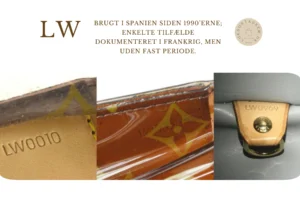
LW – Spain / France

• Most common: Spain (Toledo).

• History: Used in Spain since the 1990s; a few cases documented in France, but without a fixed period.

• Typical use: Speedy and accessories produced in parallel in Spain and France.
• Check: Compare the date code with the “Made in …” stamp and other signs of authenticity (materials, stitching, hardware).
BC – Italy / Spain

• Most common: Italy.

• History: Used in Italy since the 1980s. In the 2000s also used in Spain in connection with production restructuring.

• Typical use: Often on SLG (wallets, cardholders).

• Check: Compare the date code with the “Made in …” stamp and other signs of authenticity (materials, stitching, hardware).


General check (applies to all of the above codes)
The letters in the date code should always match the “Made in …” stamp on the bag. If they do not match, it is a clear red flag.

Note

Louis Vuitton has never published an official list of factory codes.

The information presented here is based on well-documented observations and many years of experience with authentic bags. Variations may occur, and factory codes alone do not prove authenticity.

They should therefore always be assessed together with other authenticity criteria such as materials, stitching, hardware, lining and the “Made in …” stamp.

The dates for SA, LA, LW and BC are indicative, as there are no official dates for any changes between countries. The information is based on well-documented observations and many years of experience.


Want to know where and how Louis Vuitton bags are created – and what characterizes genuine craftsmanship?

Read our article with authentic examples of heat stamps, date codes and ‘‘Made in U.S.A. of imported materials’’ labels – including on models such as the Neverfull, Speedy and Pochette Métis.

Read the full guide

Made in France… or? Where are Louis Vuitton bags produced today? and learn more about Louis Vuitton’s production, authenticity and craftsmanship.

6. Interior lining and labels

• The lining is typically cotton, microfiber or Alcantara (depending on model/year).

• Leather label with embossing: “Louis Vuitton – Paris – Made in …”.

• Color and texture vary by model and production.

• Blurred, off-centered or irregular embossing is typical of copies.

💡 Expert tip: In Damier Ebene, red lining is the most common — but there are legitimate variants on selected models/years. Wrong or uncharacteristic lining types can be a warning sign.

7. Smell / fragrance

• Real LV often has a mild leather scent or almost no smell.

• Replicas often smell of glue, chemicals or plastic.

💡 Expert tip:The smell is an underestimated but effective indicator (especially on vintage).

8. Packaging and Dustbag

• Original boxes have a distinctive yellow/saptan tone with a sharp logo and quality handle/ribbon (design may vary over time).

• Dustbags are cotton/canvas with correct LV logo and typography (design has changed over the years).

• No typos, smudged lines or poor print quality

💡 Expert tip: Packaging is also counterfeited — use it only as an additional sign, never as the only proof.

Note: Louis Vuitton does not issue authenticity cards.

9. Typical signs of copies

• Asymmetrical or crooked monogram/check.

• Too light or uneven stitching.

• Too shiny or light hardware/surface coating.

• Incorrect or copied date codes (inconsistent with other details).

• Spelling errors such as “Luis Vitton”.

• Artificial, uneven patina on Vachetta.

• Colors/patterns on models that LV never produced.

Tip: A price that is “too good to be true” is almost always a red flag.

10. FAQ & checklist

  • Do all LV bags have a date code?

    No. Vintage and models from 2021+ may not have it (due to chip).

  • Can I trust the receipt and dustbag?

    Partially. They are easy to copy and should not stand alone.

  • Does Louis Vuitton ever use plastic hardware?

    No. The hardware is metal.

  • Is it normal for the LV logo to be upside down?

    Yes, on models cut from a single piece of canvas (e.g. Speedy, Papillon, certain Keepalls).

11. Conclusion: Overall assessment is the key

Recognizing a genuine Louis Vuitton requires an eye for detail:

✔ Materials and stitching

✔ Fragrance and texture

✔ Hardware and logo

✔ Date code/ RFID

✔ Symmetry and typography


One correct detail is never enough — it is the sum that determines authenticity.

12. Our expertise at luksustasker.dk

At luksustasker.dk we assess each bag based on more than 30 authentication points — regardless of whether it is a Louis Vuitton or a Mulberry. We never look at just one element, but at the whole.

Common criteria we always examine

• Serial numbers and date codes — in conjunction with model, age and other details

• Materials and leather/canvas — texture, patina, embossing and surface feel

• Stitching and construction — stitch count, precision, symmetry and quality

• Logo and typography — font, placement and embossing/printing

• Hardware — weight, material, coating/oxidation and engravings

• Symmetry in pattern/print — monogram, check or embossed pattern must be precise and mirrored

• Stamps and labels — clarity, depth and correct placement

• Interior details — lining, labels and finish

• Wear and patina — natural aging of leather and metal

• Smell and surface — important indicator, especially on vintage

• Consistency with reference examples — comparison with original archives and documented models

 At luksustasker.dk we use magnifying glasses, UV light and access to reference archives to ensure the most accurate assessment.

You are always welcome to contact us for professional advice or more information about a specific bag on our website.

 Ready to find your next genuine Louis Vuitton?

Explore our hand-picked selection of pre-loved Louis Vuitton bags — all verified for authenticity and described with transparency and expertise.

• Are you looking for a specific model — or help choosing?

• We offer personal advice and professional insight so you can shop confidently and well-informed.

Explore the full range here: luksustasker.dk/shop

Or contact us directly — we’re ready to help you.

Select a Pickup Point

Shopping cart0
There are no products in the cart!
Continue shopping
Write to us