All about Louis Vuitton date codes – understanding formats, locations and meanings
Want to learn how to read a Louis Vuitton date code correctly – and what information it can provide about the bag’s origin, age and value?
Date codes are an important tool in authentication, but they can never stand alone as proof of authenticity. They should always be assessed in conjunction with other characteristics of the bag: the “Made in …” stamp, logo, materials, stitching, hardware and lining. This principle is similar to what we have discussed in the article How to recognize a genuine Louis Vuitton bag – materials, logo, stitching and date codes.
This guide is for informational purposes only and is based on publicly available information, industry sources, collector archives, authentication databases, applicable Industry Authentication Standards and many years of experience with authentic Louis Vuitton bags.
In this guide, we will cover:
- What is a date code?
- Historical development: 1980s to present
- Typical locations – where can I find the date code?
- Techniques – how is the date code applied?
- Datacodes – Overview of Factory Codes
- List of Louis Vuitton factory letters – with examples of the most common codes for each country of production
- Special and rare examples
- Typical errors on counterfeit codes
- Conclusion: Use the code with care
1. What is a date code?
A date code is a combination of letters and numbers, embossed or stamped on the leather or lining of a Louis Vuitton bag or accessory.
These stamps indicate the date of production and the country of production, and are used by collectors and buyers to verify the authenticity of a product.
In this guide, we explain what date codes mean, how to read them, and why they play an important role in assessing the authenticity of pre-loved and vintage bags.
The history of Louis Vuitton date codes
Although the French fashion house Louis Vuitton was founded as early as 1854, the first date codes were not introduced until 128 years later.
For many years, this was probably unnecessary, as the brand had patented production methods for both locks, canvas, and leather, making imitations almost impossible.
However, from the early 1980s, Louis Vuitton decided to add date codes to all bags and accessories.
The codes have since changed format, location and meaning several times – in line with the brand’s growing production and the need for more detailed information.
Date codes were used until March 2021, when Louis Vuitton switched to embedded microchips as a more secure and modern form of identification.
How to read a date code
• The letters indicate the country where the item was produced.
• The numbers indicate the week, month or year of production (depending on the period and format).
It is important to know that the date code is not a unique serial number, but a supporting element in the overall assessment of authenticity.
💡 Expert tip: Many replicas use realistic or directly copied date codes. Therefore, the code should always be assessed in conjunction with other authenticity details – such as materials, stitching, hardware, logo and Made in marking.
Date Codes and Authenticity – What to Remember
Date codes are just one part of a bigger authenticity picture.
A genuine Louis Vuitton bag is characterized by the quality of the materials, the precision of the stitching, the weight of the hardware and the overall finish.
At luksustasker.dk, we always evaluate the date code along with more than 30 different parameters before approving a bag as genuine.
Also read: How to recognize a genuine Louis Vuitton bag – materials, logo, stitching and date codes.
2. Historical development – from the 1980s to today
Before 1982
No standardized date codes. Bags were identified via stamps and labels.
1982 – mid-1980s:
• First: 3–4 digits (YYM / YYMM).

– Example: 823 = March 1982;
– Example:8312 = December 1983.
Mid/late 1980s: 3–4 digits followed by 2 letters (numbers → letters).
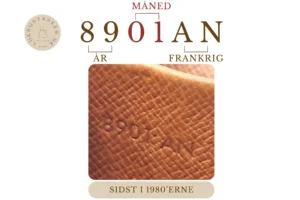
– Example: 8901AN = January 1989 (France);
– Example: 874VX = April 1987 (France).
Note: Some sources mention that letters began to appear before the digits in the late 1980s (e.g. VI8610). To avoid confusion, we follow the convention here (numbers → letters) and explain that there was a transitional period with both variants.
1990 – 2006
• Format: 2 letters + 4 digits.
• 1st & 3rd number = month, 2nd & 4th number = year.

– Example: FL0022 = February 2002 (France).
– Example: CA0012 =January 2002 (Spain).
2007 – February 28, 2021
• Format still: 2 letters + 4 digits.
• 1st & 3rd number = week, 2nd & 4th number = year.

– Example: CA1088 = week 18 in 2008 (Spain).
– Example: TR3117 = week 31 in 2017 (France).
💡Expert tip: The transition took place in late 2006 / early 2007 – therefore bags with both systems are available in this period.
From March 1, 2021
• Louis Vuitton has phased out visible date codes in favor of an NFC/RFID chip that stores information digitally.
• The transition officially took place on March 1, 2021. However, some models produced at the beginning of the year may still have both a code and a chip.
• Chip data is not always available to consumers – it is primarily used by Louis Vuitton itself and by professional authentication partners.
3. Typical locations – where can I find the date code?
Typical locations – where can I find the date code?
Generally, a date code in a Louis Vuitton bag is located inside the bag – typically close to the seams and often in connection with a pocket.
To find the date code on your bag, first examine the interior pockets. In most cases, you will find the code either embossed on a small leather patch inside the pocket or stamped directly into the lining. Look carefully, especially if the bag has an Alcantara lining, as the code may be faded and almost invisible.
Below you can see where the date code is most often located on some of the most popular Louis Vuitton models:
Louis Vuitton Speedy
On a Speedy – regardless of size – you will find the date code under the inside pocket. The code is embossed on one of the two small leather patches by the pocket.
Louis Vuitton Neverfull
On the classic Neverfull, the date code is located under the large fabric pocket on the right side (when looking directly at the pocket).
Note that an Epi leather Neverfull may have the date code in a different location – namely on the inside of one of the handles, exactly where the handle meets the upper leather edge.
Louis Vuitton Pochette Métis
On a Pochette Métis, you will find the date code in the outside zipper pocket on the back of the bag. Open the pocket and you will be able to see the code if the bag was produced between 2014 and 2021.
Louis Vuitton Toiletry Pouch 26
The date code is located inside near the top, embossed directly into the leather lining along one of the side seams.
Louis Vuitton Artsy
The code is located on the lining inside one of the interior pockets – this model usually does not have a leather patch.
Louis Vuitton Palm Springs Mini Backpack
The date code is typically found inside on the right side, embossed on a small leather patch that sits by the interior pocket.
💡 Expert tip:
If you can’t find the date code, it doesn’t necessarily mean that the bag is fake. Starting in 2021, Louis Vuitton began gradually phasing out the classic date codes and replacing them with microchips that can only be scanned by authorized retailers.
4. Techniques – How are date codes applied?
Louis Vuitton Date Code Location
The location of Louis Vuitton date codes varies depending on the model and year of production.
Knowing where to look for these stamps makes authenticating and dating bags more accurate and efficient.
• Interior Leather Patches:
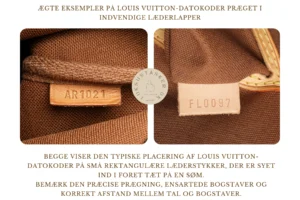
The date code is most often found on a rectangular leather patch sewn into the lining along a seam.
This is the most common location of date codes on Louis Vuitton bags.
• Direct embossing:

On some models, the date code is embossed directly into the lining or in a discreet place in the bag, e.g. close to the top edge of an inside pocket.
• Inside pockets:

Date codes are often found along the top edge of inside pockets or on a riveted leather patch under a loose inside pocket.
On some models, such as the Speedy, the date code is embossed on a leather patch sewn into the inside seam.
5. Datacodes – Overview of Factory Codes

Overlapping Louis Vuitton Factory Codes – Full Explanation
SD – France / USA
• Older models (before the mid-1990s): mostly France.
• Newer models (from the mid-1990s onwards): most often USA (San Dimas, California).
• History: Started as a French code, but was adopted for American production during the 1990s.
• Typical use: Very common on canvas bags from the USA in the 1990s and 2000s.
• Check: Compare the date code with the “Made in …” stamp and other signs of authenticity (materials, stitching, hardware).
FL – France / USA
• Most common: France.
• History: Original French code; also documented on bags from the USA, especially in the 1990s.
• Typical use: American series in the 1990s.
• Check: Compare the date code with the “Made in …” stamp and other signs of authenticity (materials, stitching, hardware).
SA – France / Italy
• Most common: France.
• History: Known as a French code in the 1990s on classic bags. Later also seen in Italy, especially on smaller leather goods.
• Typical use: Classic bags (France), wallets/belts (Italy).
• Check: Compare the date code with the “Made in …” stamp and other signs of authenticity (materials, stitching, hardware).
LA – France / USA
• Most common: USA (San Dimas, California).
• History: Appeared in France in the 1980s and early 1990s. From the late 1990s it is mainly seen in the USA.
• Typical use: Bags from the 1990s and early 2000s.
• Check: Compare the date code with the “Made in …” stamp and other signs of authenticity (materials, stitching, hardware).
LW – Spain / France
• Most common: Spain (Toledo).
• History: Used in Spain since the 1990s; a few cases documented in France, but without a fixed period.
• Typical use: Speedy and accessories produced in parallel in Spain and France.
• Check: Compare the date code with the “Made in …” stamp and other signs of authenticity (materials, stitching, hardware).
BC – Italy / Spain
• Most common: Italy.
• History: Used in Italy since the 1980s. Also used in Spain in the 2000s in connection with production restructuring.
• Typical use: Often on SLG (wallets, cardholders).
• Check: Compare the date code with the “Made in …” stamp and other signs of authenticity (materials, stitching, hardware).
💡Expert tip: General check (applies to all codes above)
The letters in the date code should always match the “Made in …” stamp on the bag. If they do not match, it is a clear red flag.
💡Note
Louis Vuitton has never published an official list of factory codes.
The information presented here is based on well-documented observations and many years of experience with authentic bags. Variations may occur, and factory codes alone do not prove authenticity.
They should therefore always be assessed together with other authenticity criteria such as materials, stitching, hardware, lining and the “Made in …” stamp.
The dates for SA, LA, LW and BC are indicative, as there are no official dates for any changes between countries. The information is based on well-documented observations and many years of experience.
Do you want to know where and how Louis Vuitton bags are created – and what characterizes genuine craftsmanship?
Read our article with authentic examples of heat stamps, date codes and ‘‘Made in U.S.A. of imported materials’’ labels – including on models such as the Neverfull, Speedy and Pochette Métis.
Read the full guide
Made in France… or? Where are Louis Vuitton bags made today? and learn about Louis Vuitton’s production, authenticity and craftsmanship.
6. List of Louis Vuitton factory letters – with examples of the most common codes for each country of production
Many people mistakenly believe that a genuine date code automatically means that the bag is genuine. Unfortunately, this is not the case.
To assess authenticity, several factors must be taken into account – not only the date code itself, but also the font, the color of the embossing, its location and the overall impression of the bag.
Proper authentication requires that the date code be assessed in conjunction with other characteristics:
• The “Made in…” stamp
• The Louis Vuitton logo and its precision
• Materials and leather type
• Stitching and craftsmanship
• Hardware and zippers
• Interior lining and labels
Below are some of the most common fonts used for date codes. Please note that the list is not exhaustive and is constantly updated – although Louis Vuitton no longer uses date codes on newer models.
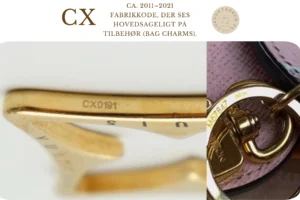
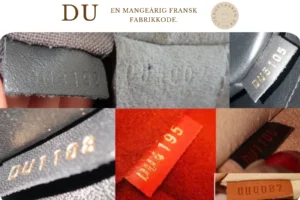
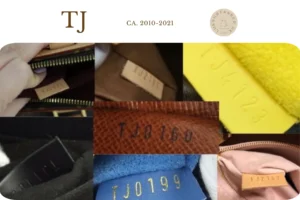
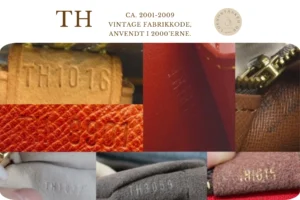
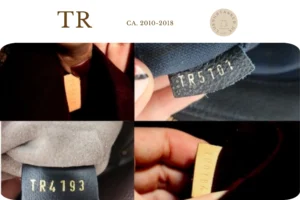
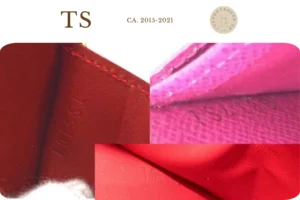
List of Louis Vuitton Date Codes (Made in France)
France is the home country of Louis Vuitton and the main production site for the brand’s leather goods. The majority of Louis Vuitton’s classic and exclusive bags are made here – from the iconic models produced in the Atelier Asnières near Paris to modern workshops spread across the country.
French models are marked “Made in France” and are characterized by precision, quality craftsmanship and a long tradition of savoir-faire. The date codes from the French workshops follow the same structure as in the other countries, but are recognized by specific factory letters that show that the bag was made in France.


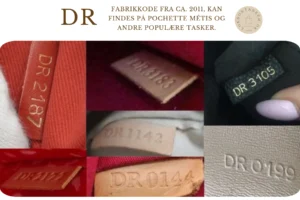


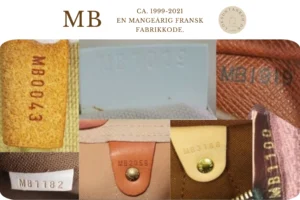
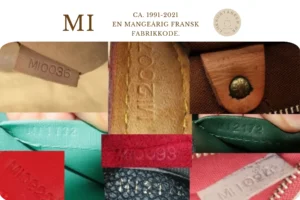


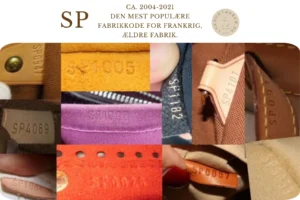


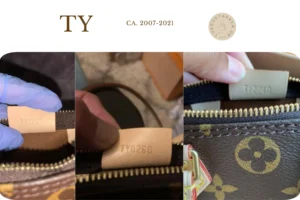


List of Louis Vuitton date codes (Made in Spain)
Louis Vuitton has been producing bags and small leather goods in Spain for many years – especially in the areas around Barcelona and Girona, where there is a long tradition of craftsmanship and leather production. The Spanish workshops are an important part of Louis Vuitton’s European production and are responsible for a large part of the brand’s popular models.
The date codes from the Spanish ateliers follow the same structure as in other European countries, but are distinguished by special factory letters that identify that the bag was made in Spain.
Below you will find an overview of the most well-known Spanish factory abbreviations that appear on genuine Louis Vuitton bags marked Made in Spain.

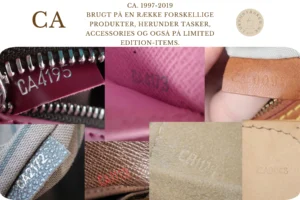


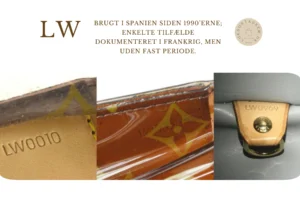
 List of Louis Vuitton date codes (Made in Italy)
For many years, Louis Vuitton has had selected bags and small leather goods produced in Italy – especially in Tuscany, which is known for its strong leather goods and craftsmanship. The Italian workshops produce both classic models and accessories in line with the French and Spanish ateliers. The date codes from Italian workshops follow the same structure as in other EU countries and are distinguished by special factory letters that indicate that the item was made in Italy. Below you will find an overview of the most well-known Italian factory abbreviations that can be seen on genuine Louis Vuitton bags marked Made in Italy.
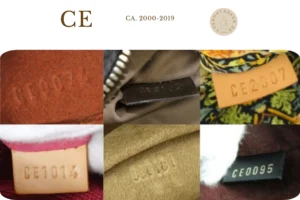
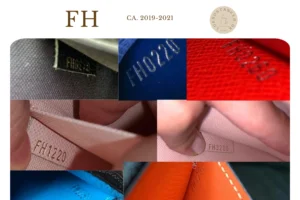

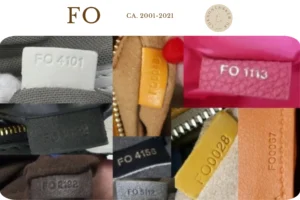
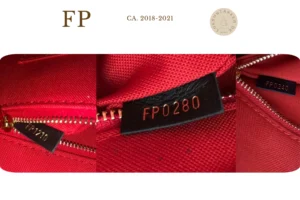
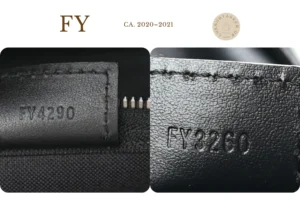


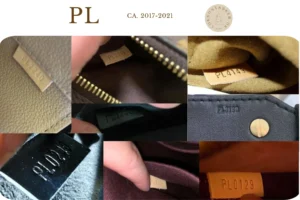
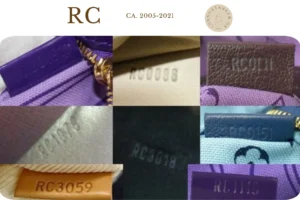

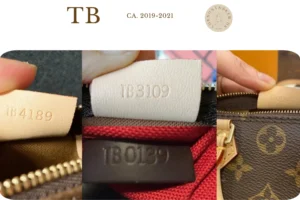
List of Louis Vuitton Date Codes (Made in U.S.A.)
Louis Vuitton has been producing in the United States for more than three decades, where the brand operates several leather workshops in California and at Rochambeau Ranch in Texas (Johnson County). The American workshops produce bags and small leather goods for the North American market to exactly the same quality standards as the European workshops.
American models are marked “Made in U.S.A.” – either embossed directly into the leather or on a separate label with the text “Made in U.S.A. of imported materials”. This addition means that the materials (leather, lining and hardware) are imported from Europe, while the bag itself is assembled in the United States.
The date codes from the American workshops follow the same structure as in European countries, but are distinguished by specific factory letters, which indicate that the bag is made in the United States.

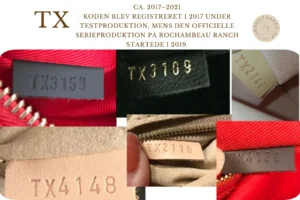
List of Louis Vuitton Date Codes (Made in Germany)
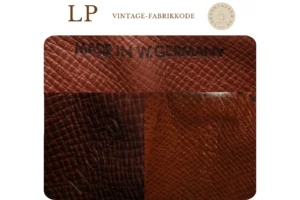
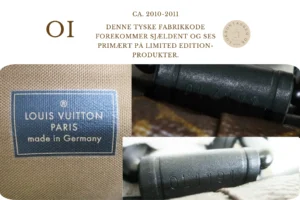
It is rare to see Made in Germany on Louis Vuitton bags. When it does appear, it is usually vintage or special editions. Officially, Louis Vuitton states that leather goods are made in France, Spain, Italy and the USA; therefore, German date codes are considered exceptions in an archival/vintage context.
Examples of factory letters documented in the market: LP, OL.
7. Special and rare examples


• Saks Fifth Avenue & Neiman Marcus:
In the 1970s and 1980s, these American department stores sold exclusive Louis Vuitton models, made specifically for the American market.
The bags were often provided with foil stamps or small metal plates with the name of the department store.
They were produced in collaboration with The French Luggage Company and used original Louis Vuitton canvas under official license. Today they are considered rare collector’s items.
• The French Luggage Company (USA, c. 1976–1991):
Louis Vuitton established a licensing partnership during this period to meet the growing demand in the United States.
The bags were sold through luxury retailers such as Saks Fifth Avenue, Neiman Marcus and Myers, and are characterized by:
– Tyvek tags instead of leather tags,
– lack of date codes,
– different hardware and zippers.
Although these models differ from the European versions, they are 100% authentic and documented as part of Louis Vuitton’s official licensed production.
💡 Expert tip: Bags from The French Luggage Company are often mistaken for replicas because they do not have date codes. A correct assessment should therefore be based on materials, stitching and the precision of the logo, not just the marking.
8. Typical errors in counterfeit codes
Counterfeit date codes often reveal themselves by:
• wrong font or mismatched letters
• too deep or uneven embossing
• incorrect spacing between numbers and letters
• codes that do not match the Made in label

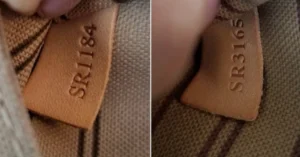
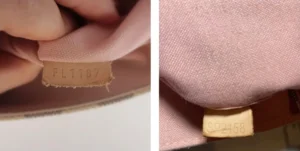



💡Expert tip: Use our photo guide as a reference for typical errors (font, depth, spacing, mismatch with Made in), and always evaluate the code in conjunction with other details.
9. Conclusion – use the date code wisely
A Louis Vuitton date code can provide valuable insight into a bag’s origin – but it should never stand alone.
At luksustasker.dk, we evaluate each bag based on more than 30 authentication parameters: materials, stitching, logo, hardware, age, accessories and much more.
Are you looking for a Louis Vuitton bag with documented origin and professional authenticity assessment?
Explore our current selection here: luksustasker.dk/shop
We know how important it is to feel safe when investing in luxury – especially in the pre-loved market.
Do you have questions or need personal guidance?
Contact us – we will be happy to help you make an informed and safe choice.